PRODUCTION · Production
A Massive Group on the Oval: Cybercabs Test Stoplights at Giga Texas
Joe Tegtmeyer's drone frames show a gold Cybercab pack working the Giga Texas outer oval and stopping together at portable west-side lights. This is campus validation, not a new city.
Jordan Hale, Production
Published · 4 min read
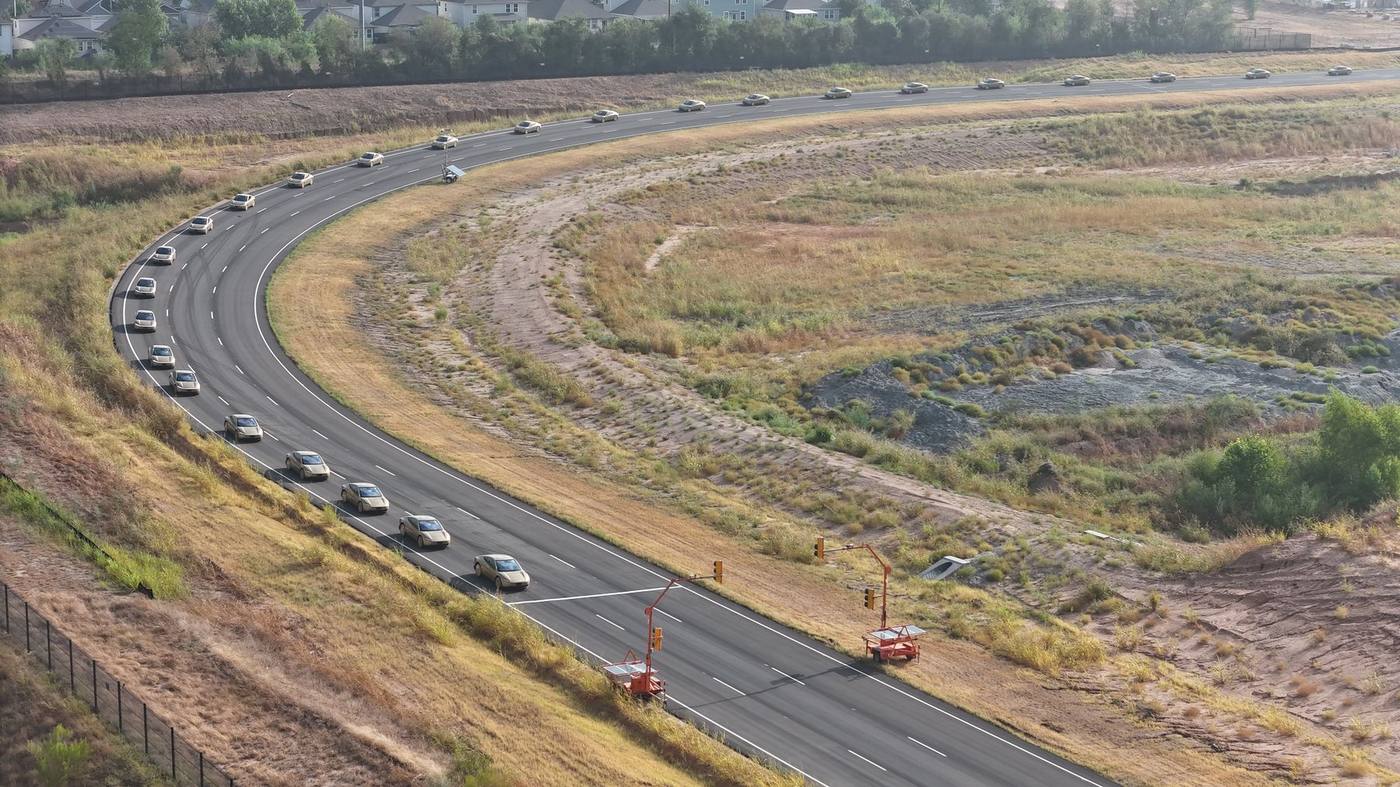
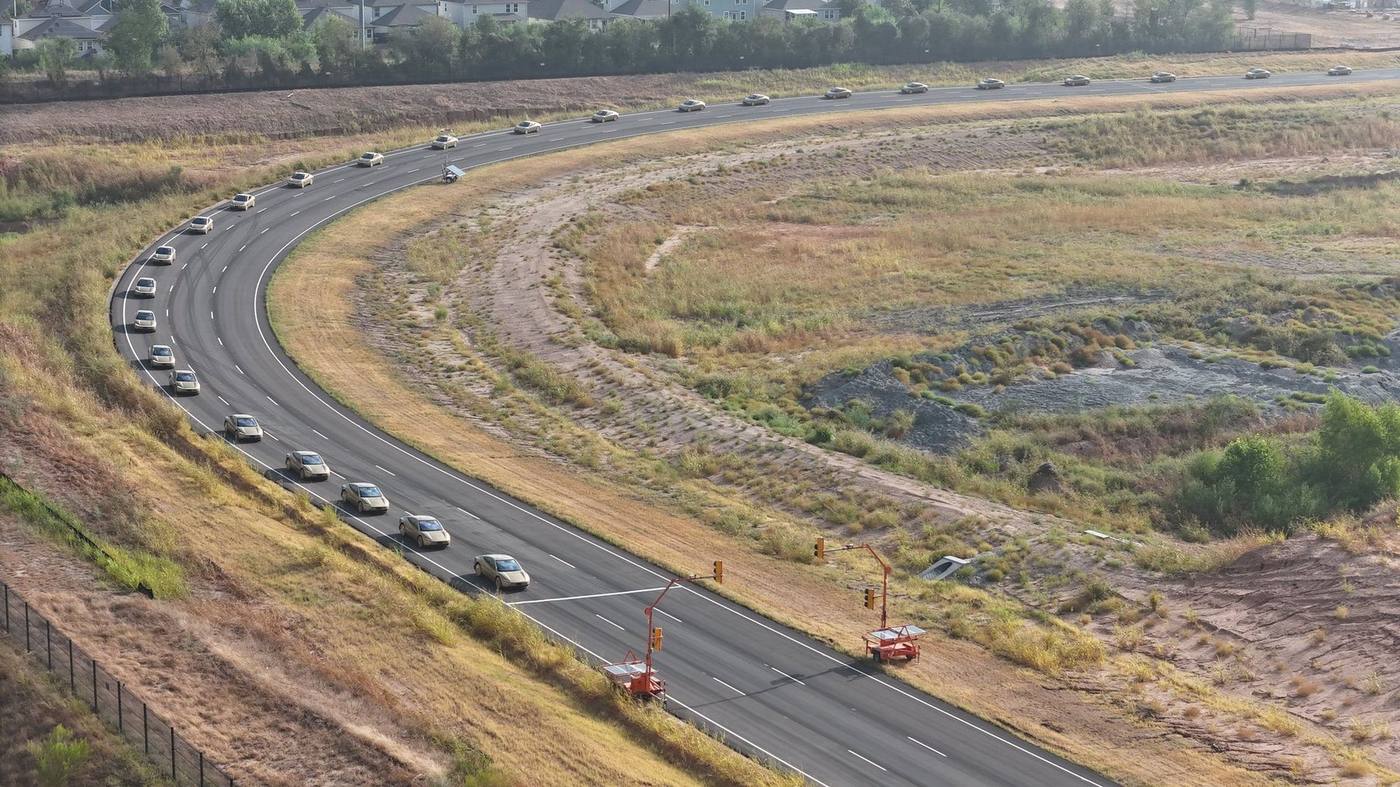
AUSTIN, Texas - A long gold line of Tesla Cybercabs worked the outer oval at Giga Texas on Wednesday, rolling as one group, then stopping together at portable stoplights set on the west side of the track.
Joe Tegtmeyer's midday drone frames show the convoy clearly: dozens of purpose-built robotaxis spaced on the curve, solar-powered signal trailers on the shoulder, and dry Texas scrub beyond the fence. Robotaxi Radar amplified the same tip later in the afternoon. The story is not a soft launch or a new city. It is fleet validation in plain sight, one week after paid Cybercab rides opened in limited areas of Austin.
Tegtmeyer wrote that Cybercab testing was underway again on the Giga Texas track, with Model YL rough-road work running on the inner oval at the same time. The Cybercabs, he said, stayed in one massive group on the outer loop and braked together at the temporary lights. That detail matters for a robotaxi program that already takes public fares in Austin: group spacing, synchronized stops, and repeated oval laps are how a factory campus turns hardware into fleet behavior before those cars return to city streets.
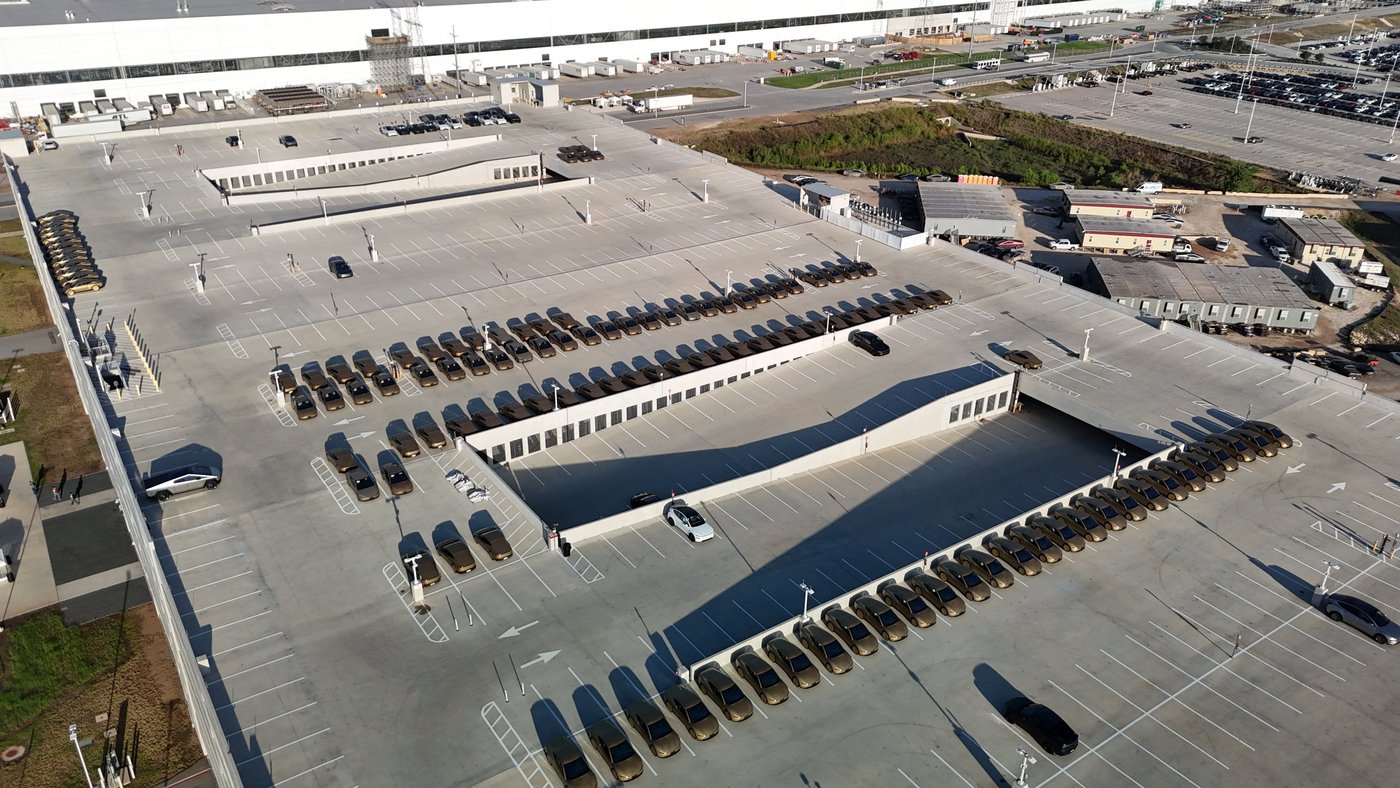
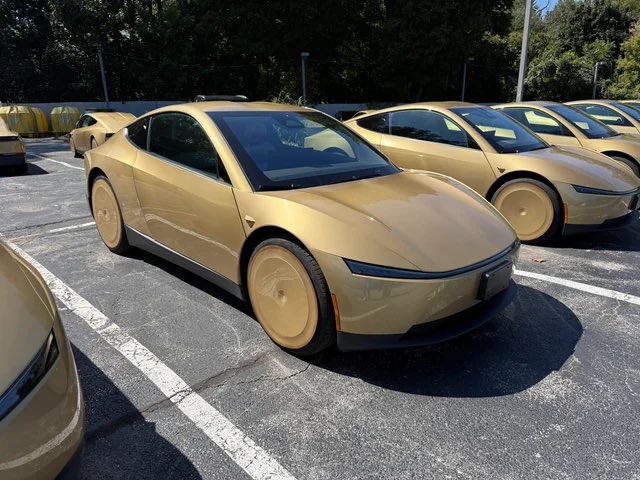
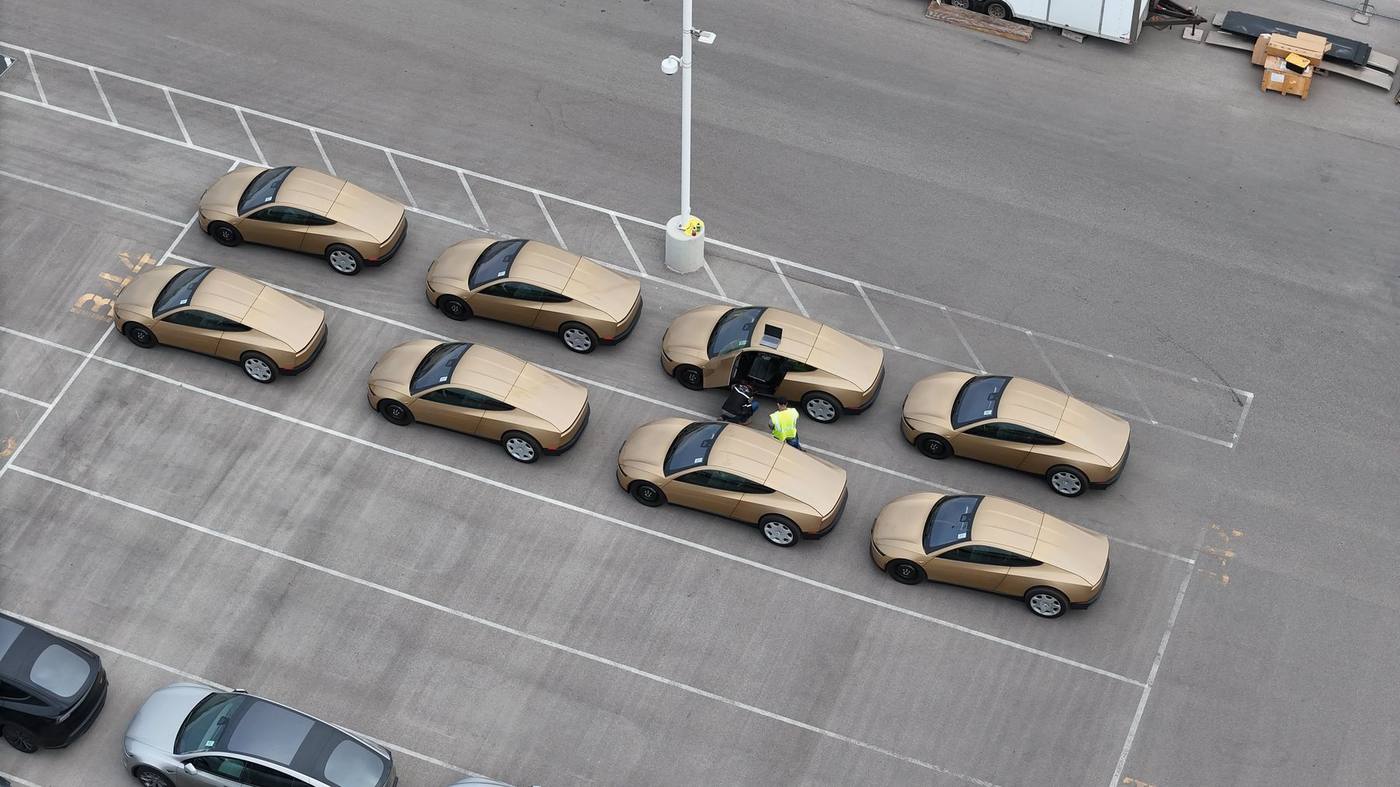
The photographs do not invent a production tally. They do show scale. More than twenty identical gold coupes appear in a single pass, not a lone mule. Butterfly-door silhouettes and solid aero covers read the same from front to back of the line. For a Production desk that has already filed Unboxed line talk and Austin hiring stacks, Wednesday's oval is the outdoor half of the same story: cars that left the plant are still being worked as a pack.
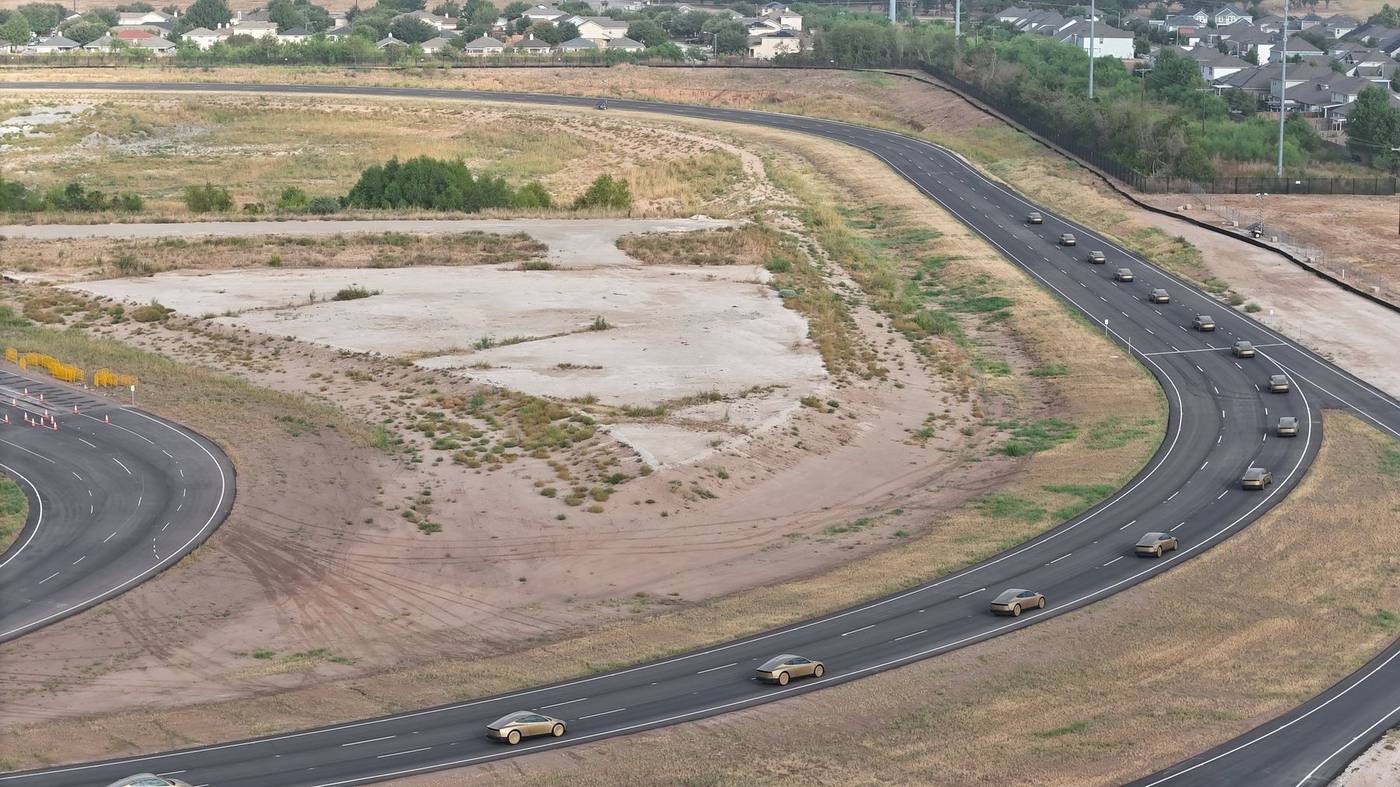
Portable signals on trailers are a deliberate prop. A closed oval can stage intersection logic without sending every unit into downtown traffic for every software check. Tegtmeyer's note that the group stopped together at the west-side lights is the operational beat. Coordinated stopping is ordinary for a human convoy. For a robotaxi fleet, it is a public glimpse of how Tesla is rehearsing multi-vehicle discipline beside the factory that builds the cab.
Austin riders already know the product in another form. Paid Cybercab service began in limited Austin zones on Sept. 3 through the Robotaxi app when a unit is available. Track miles do not replace those trips. They sit upstream of them: more laps, more synchronized stops, more time on a course Tesla controls before the same gold coupe joins the city map again.
Robotaxi Radar's afternoon post kept the tip short: Cybercab testing continues on the Giga Texas test track. The fuller record is Tegtmeyer's thread, with stills and video of the oval. Neither account claimed a new fare market or a head-count from Tesla. The filing standard here is what the camera shows. A massive group. Outer oval. Shared stops at temporary lights. Midweek at the Austin factory campus.
That is a healthy production-and-ops picture for Cybercab. The cars are not props on a stage. They are running as a fleet on Tesla's own asphalt, beside the plant that stamps and joins them, while Austin already sells some of those miles to the public. Group oval work is how a company that opened paid rides keeps tightening the same platform instead of freezing it at launch week.
Readers should keep the lanes straight. The oval is not the Robotaxi app. The stoplight trailers are not an Austin intersection. Model YL rough-road loops on the inner course are a separate test thread Tegtmeyer noted in the same visit. The Cybercab lead is the gold pack on the outer loop, photographed from above, moving and stopping as one.
For Tesla, that image does useful work. It shows inventory that can move in formation. It shows a factory campus busy enough midweek to fill an oval. And it shows Cybercab still collecting controlled miles after the Sept. 3 commercial start, which is how a robotaxi program grows without pretending every drone still is a new city opening.
Jordan Hale is a production reporter covering Giga Texas builds, Unboxed manufacturing, and Cybercab factory ops. Based in Austin.