Latest · Breaking
In the Crash Lab, Cybercab Takes the Hits It Was Built For
Tesla's 16-second crash-lab film shows a Cybercab taking a side-pole strike, center airbags that meet between the seats, and a rear barrier hit.
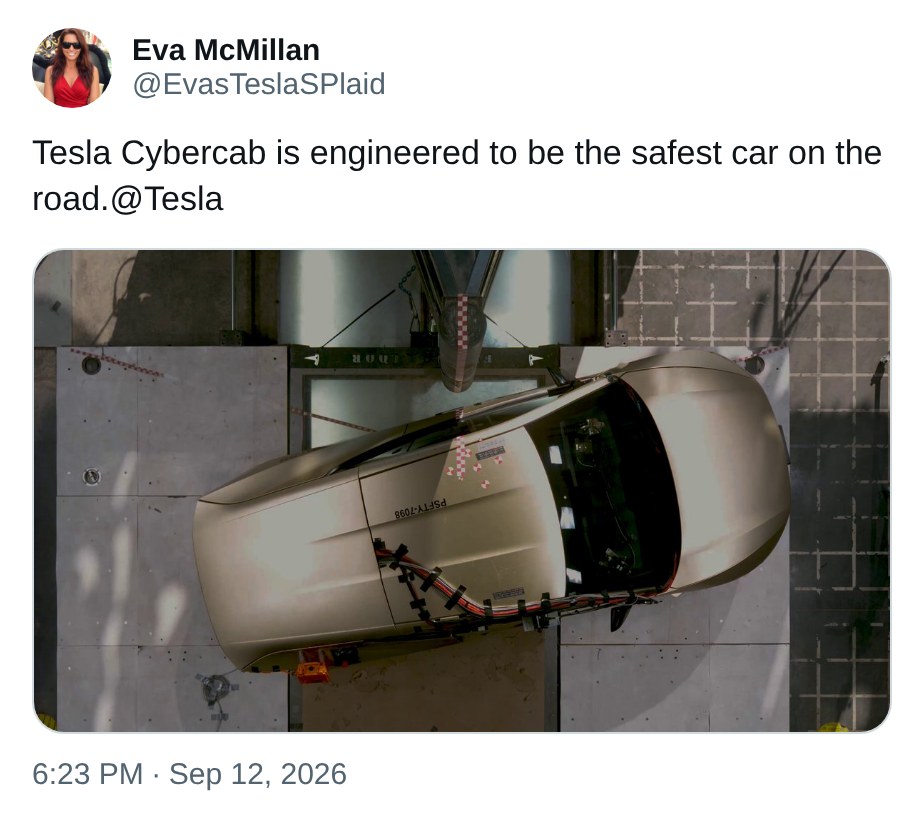
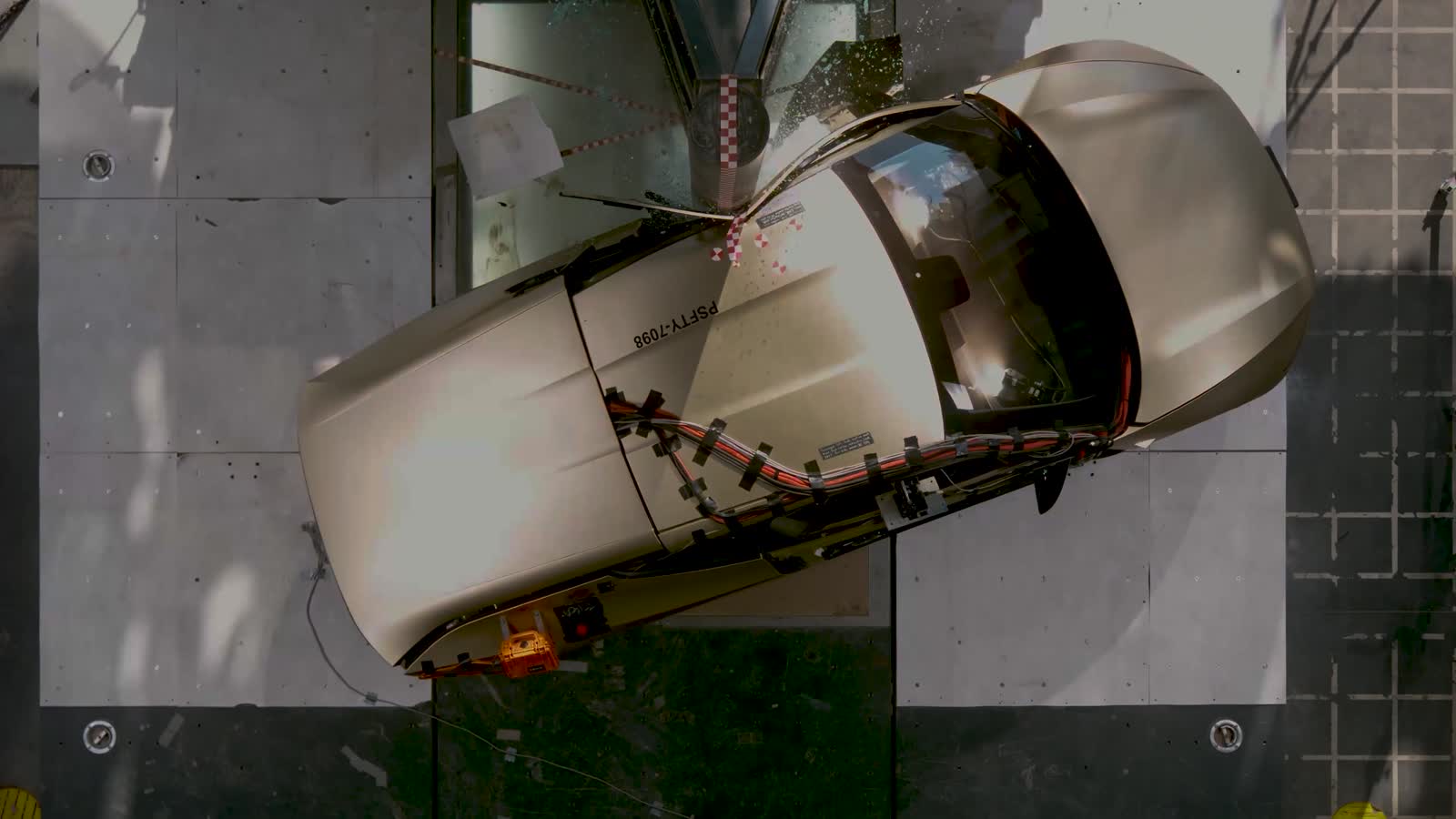
AUSTIN, Texas - Tesla put a Cybercab through a short, controlled crash-lab sequence that shows how the unsupervised two-seater is built to protect the people who ride it. In about 16 seconds of film that circulated on Saturday, the gold coupe takes a side-pole strike, a dual-seat airbag deploy with bags that meet between the occupants, and a rear barrier impact. The work is indoors and instrumented.
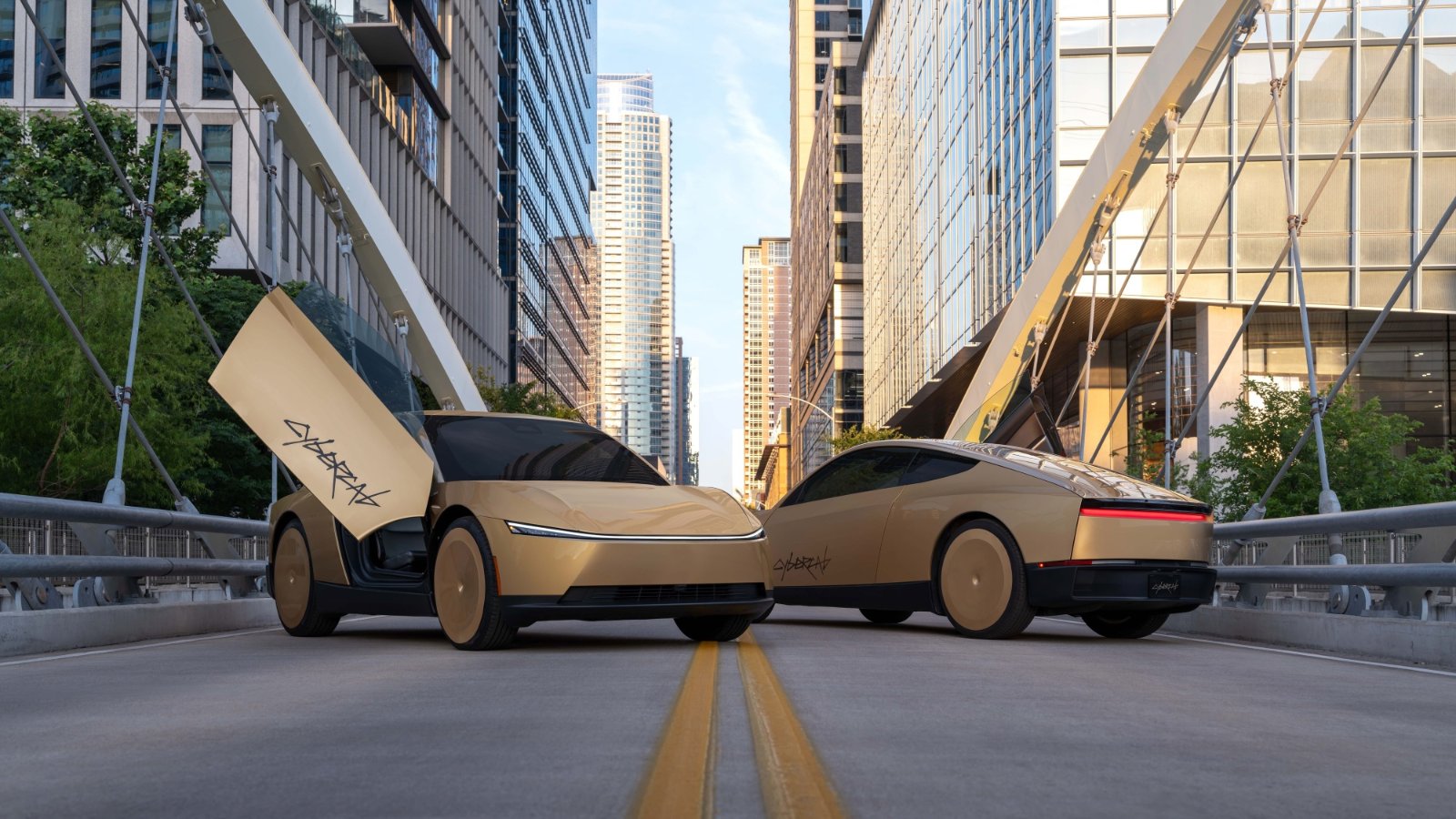
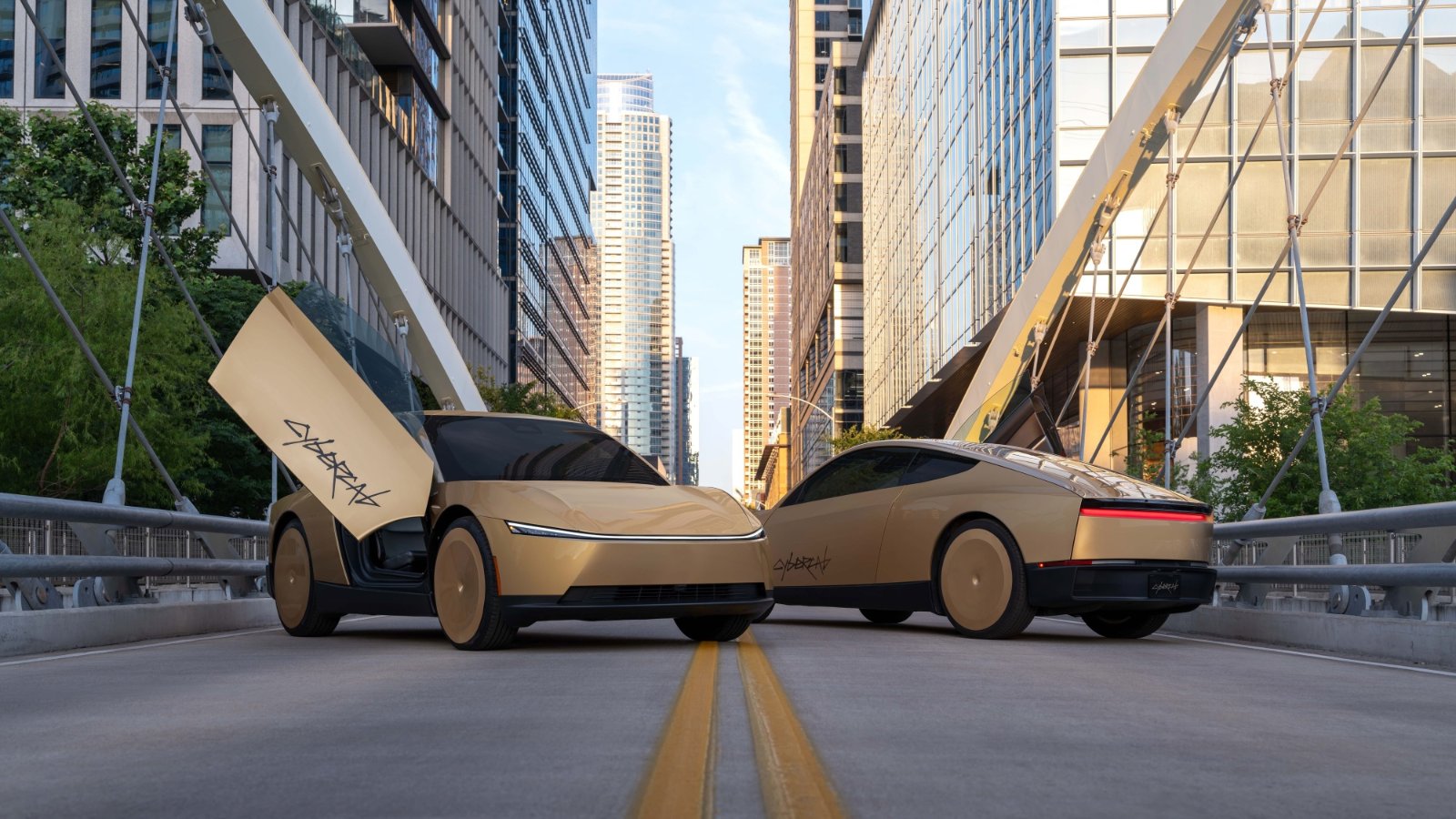
The opening frames put the car on a marked lab floor, cables running to measurement gear on the roof and rear. When the pole hits the side, glass breaks and debris settles on the grid. The silhouette is the same Cybercab already taking fares in Austin: a low two-seat coupe without traditional side mirrors. The point of the shot is not spectacle. It is structure under load.
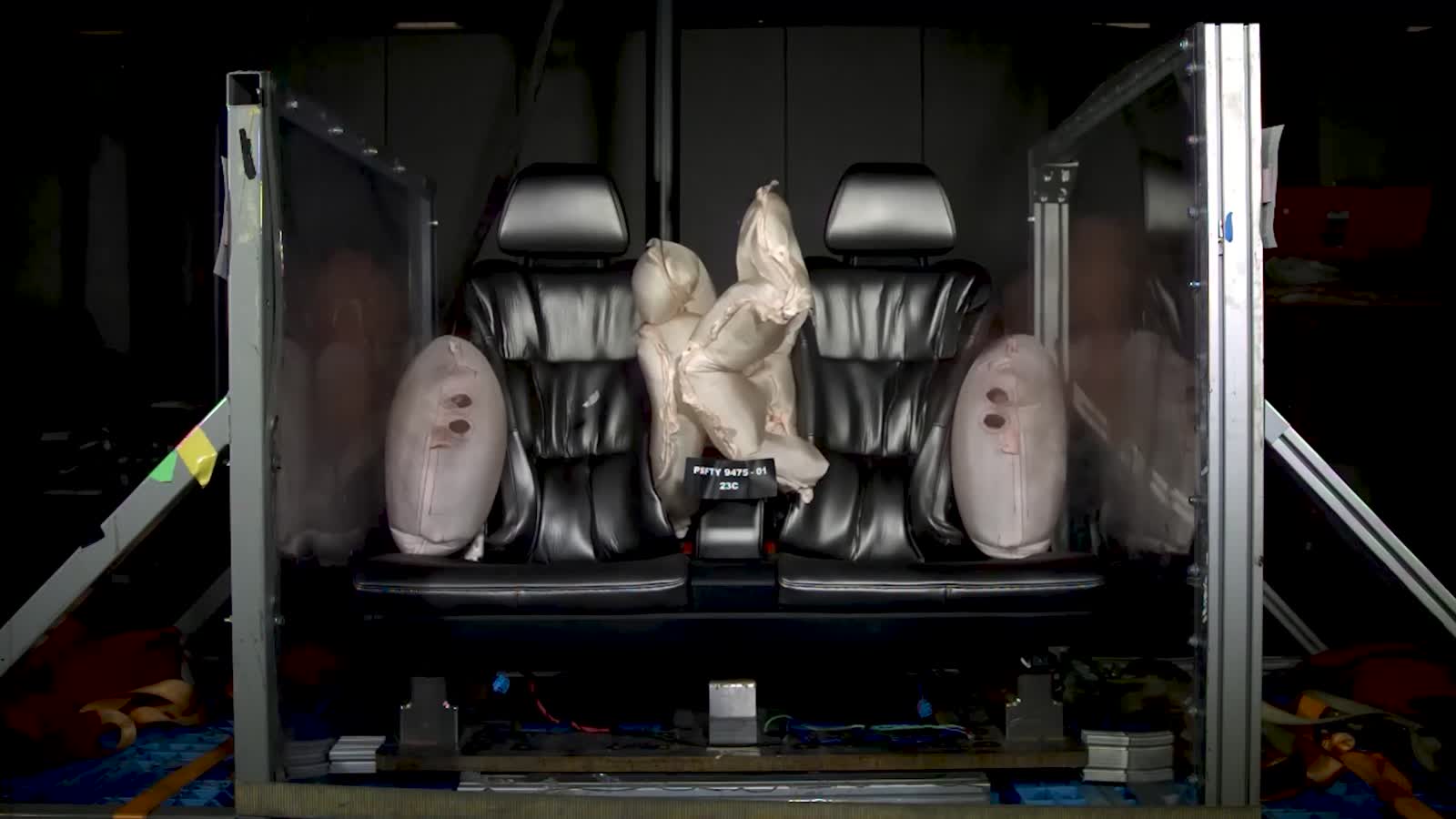
The film then cuts to a seat rig in a dark lab. Two black seats sit side by side. Outboard airbags have fired. Two large center airbags have deployed from the inner sides and meet in the middle, forming a soft wall between the passengers. For a cabin with no steering wheel and no pedals, that center wall is the design answer to a missing dash column. Cybercab puts two people in front of a wide screen. The bags are built for that layout.
Riders who have already sat in the unsupervised cabin know how open the forward space feels. There is no column to dodge and no pedal well to manage. Protection in that layout has to come from the structure around the seats and from bags that work without a traditional driver station. The center-bag frame is the clearest picture yet of how Tesla answers that problem for a taxi built around two passengers.
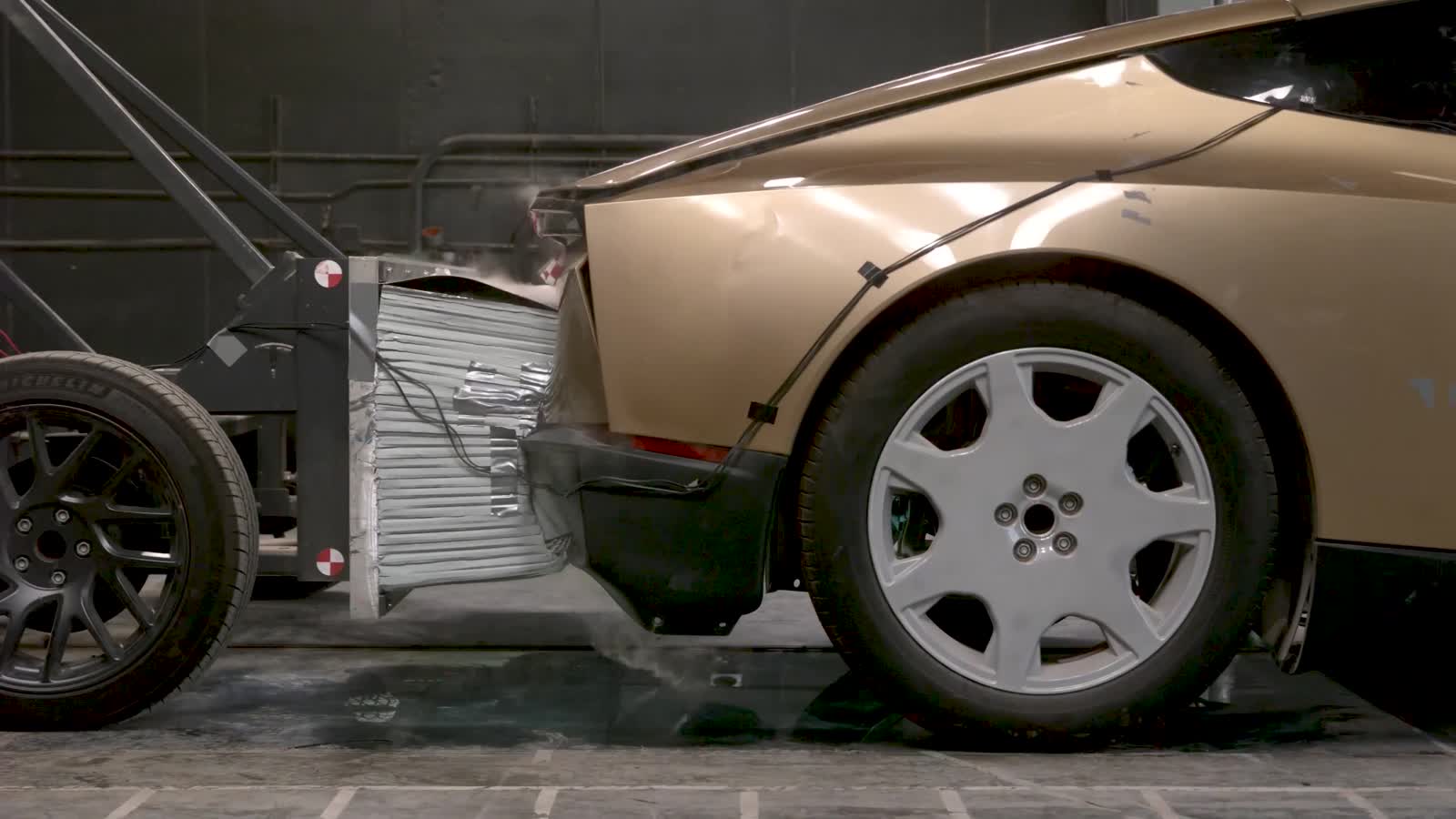
The closing stretch returns to the gold body for a rear hit. A sled with a honeycomb deformable barrier drives into the bumper. Dust rises at the crush zone. Sensor wires run along the quarter panel. The hatch takes the energy the way a production taxi is meant to take it - in a controlled hit, before the next curb and the next passenger.
Eva McMillan shared the clip on X and called Cybercab engineered to be the safest car on the road. The line is hers. The pictures are Tesla's safety case in miniature: side structure, center bags, rear crush. Nothing in the film is a public-road crash. It is design-intent media for hardware already in revenue service.
Austin remains where the public can open the Robotaxi app and hail a Cybercab today. The film does not open a new city or change the fare map. It shows the same wheel-less two-seater that already works on Austin streets taking the hard hits it was designed to survive. For riders who know the empty cabin from downtown blocks, the lab sequence fills in what sits under the gold skin.
Supervised Model Y robotaxi rides remain a separate hardware story even when both products appear under the Robotaxi brand. The car on the crash floor is Cybercab. Side structure, center bags, and rear crush are the chapters that decide whether a taxi can keep working after a bad day. The coupe that holds lane on Austin streets is the same coupe under test.
Harper Quinn is a senior correspondent covering Robotaxi launches, Austin fleet ops, and the day-to-day of Cybercab rides. Previously reported transport and consumer tech for independent trade titles; based in Austin.