POLICY · Policy
Date With Washington: NHTSA Will Update Its Driverless Rules Rewrite on 1 December
A notice filed Tuesday sets an Automated Driving Systems workshop at DOT headquarters, where NHTSA's Office of Automation Safety will report on its guidance and on modernizing the federal safety standards a purpose-built car like Cybercab has to meet.
Priya Nair, Policy desk
Published · 3 min read
WASHINGTON - The federal rulebook that Cybercab was built to fit is getting a public check-in. The National Highway Traffic Safety Administration will hold an Automated Driving Systems workshop on the afternoon of 1 December at Department of Transportation headquarters in Washington, according to a notice filed for public inspection on Tuesday. The agency's Office of Automation Safety will present an update on the status of its guidance documents and its work to modernize the Federal Motor Vehicle Safety Standards.
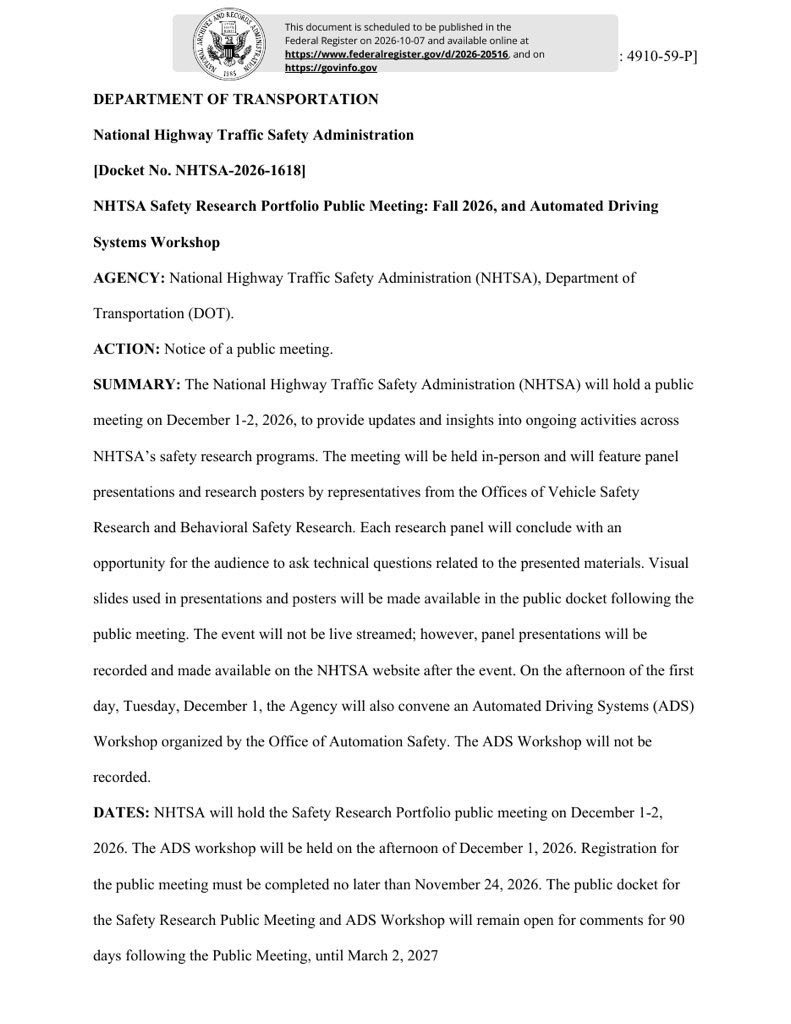
The notice, Federal Register document 2026-20516, is scheduled to be formally published on Wednesday. It pairs the workshop with NHTSA's Safety Research Portfolio public meeting, which runs on 1 and 2 December. After the automation office presents, stakeholders will be able to offer technical input in what the agency calls an interactive, round-robin format. Registration closes on 24 November. The public docket, NHTSA-2026-1618, will take comments until 2 March 2027.
It is a progress report, not a new rule. Nothing in the notice changes a standard. What it does is put a date on the next public account of where the rewrite stands. The research panels will be recorded and posted afterward. The automation workshop will not be recorded, the notice says, so the people in the room will be the first source on what the agency tells them.
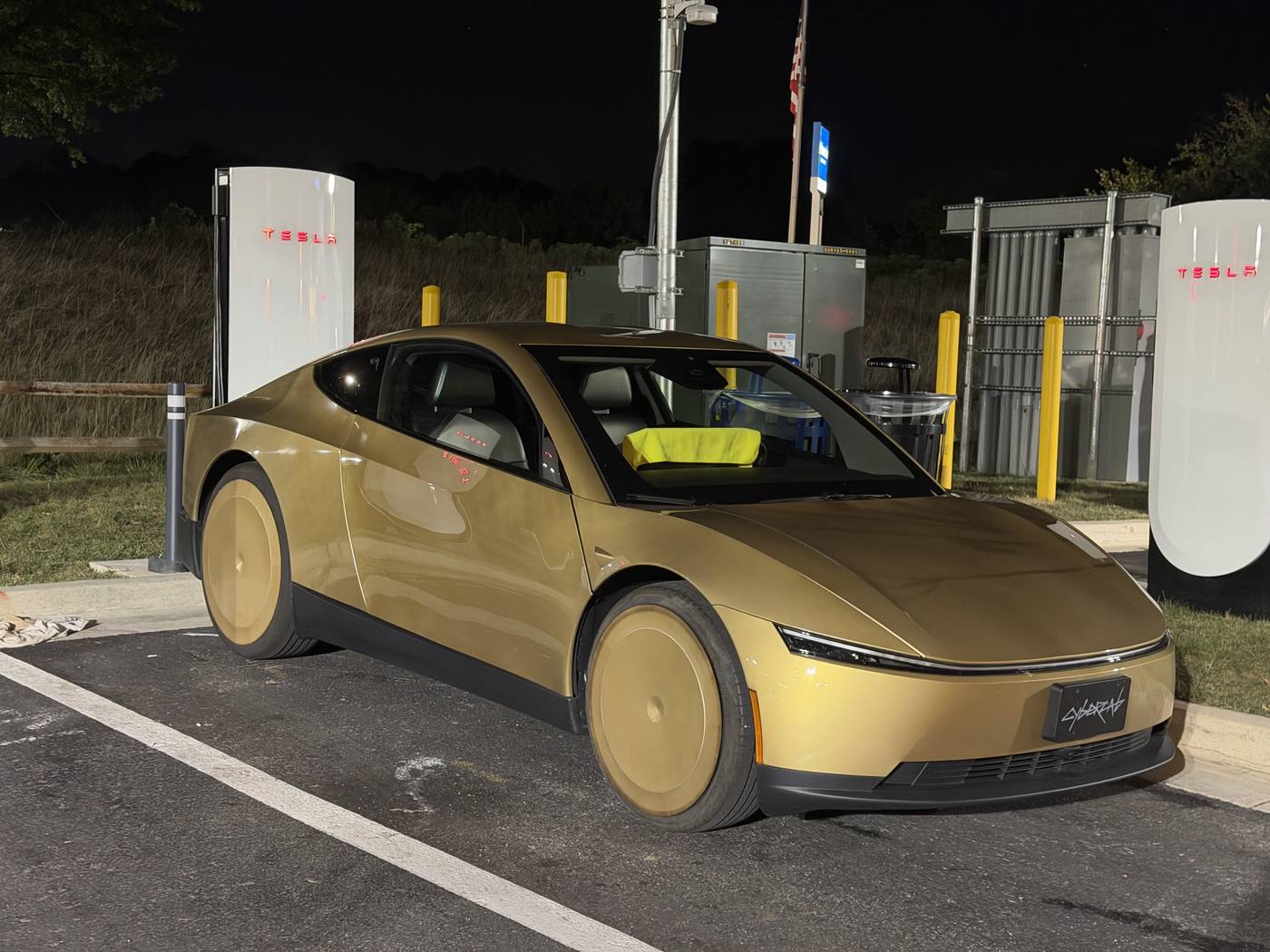
Few vehicles have more riding on that rewrite than Cybercab. Tesla began paid service in Austin on 3 September with a purpose-built two-seater that has no permanently attached conventional controls, such as a brake pedal, accelerator, steering wheel or mirrors. Tesla told NHTSA it certified the car as meeting all applicable federal standards. Many of those standards were written around a human driver.
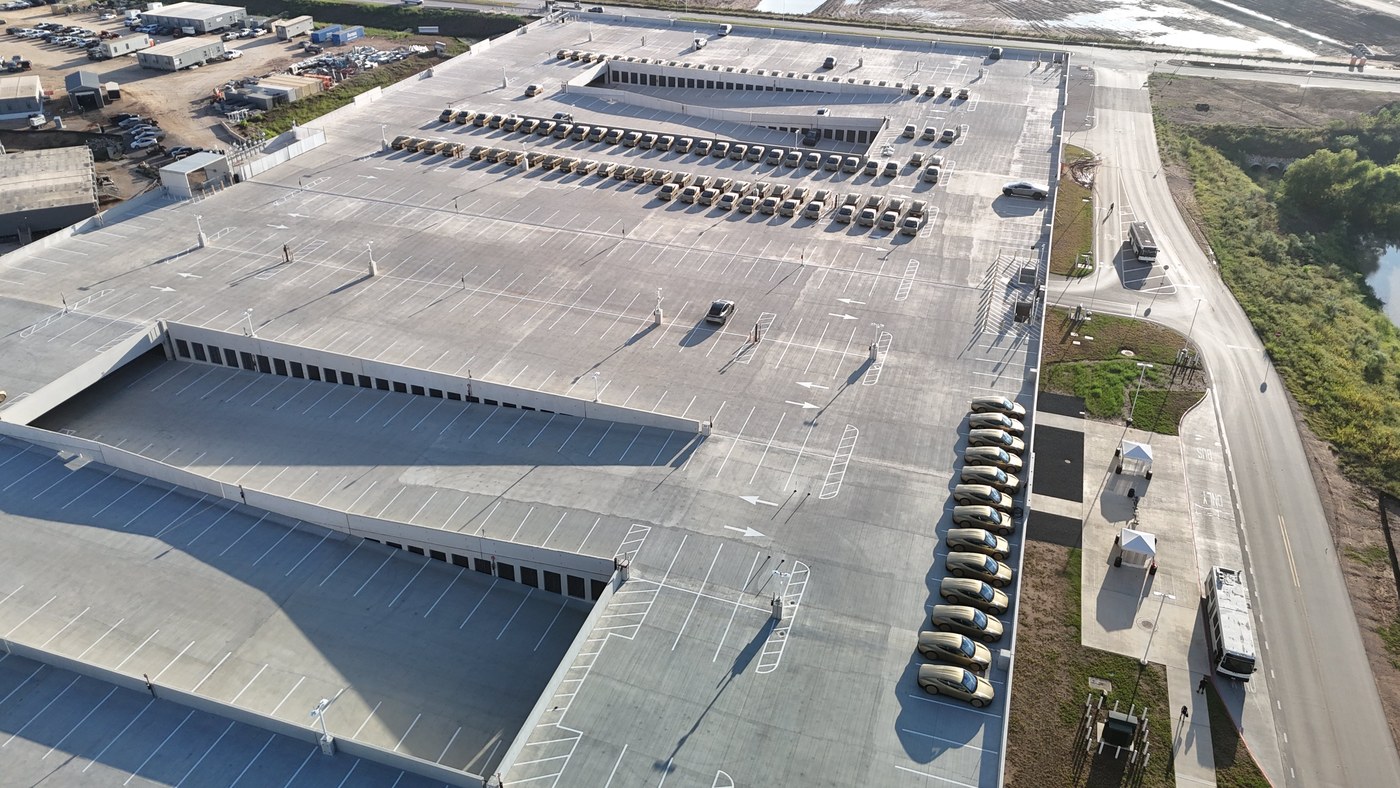
The certification itself is under review. NHTSA opened Audit Query AQ26002 on 3 September to examine the process and technical data behind it, including how far it relied on determinations that certain standards do not apply to Cybercab. A special order gave Tesla 21 questions to answer under oath by 30 September. An agency spokesperson told CNBC on Saturday that Tesla had obtained an extension. The revised date was not disclosed in that report. The audit is not a recall, and Cybercab rides have continued in Austin while it is open.
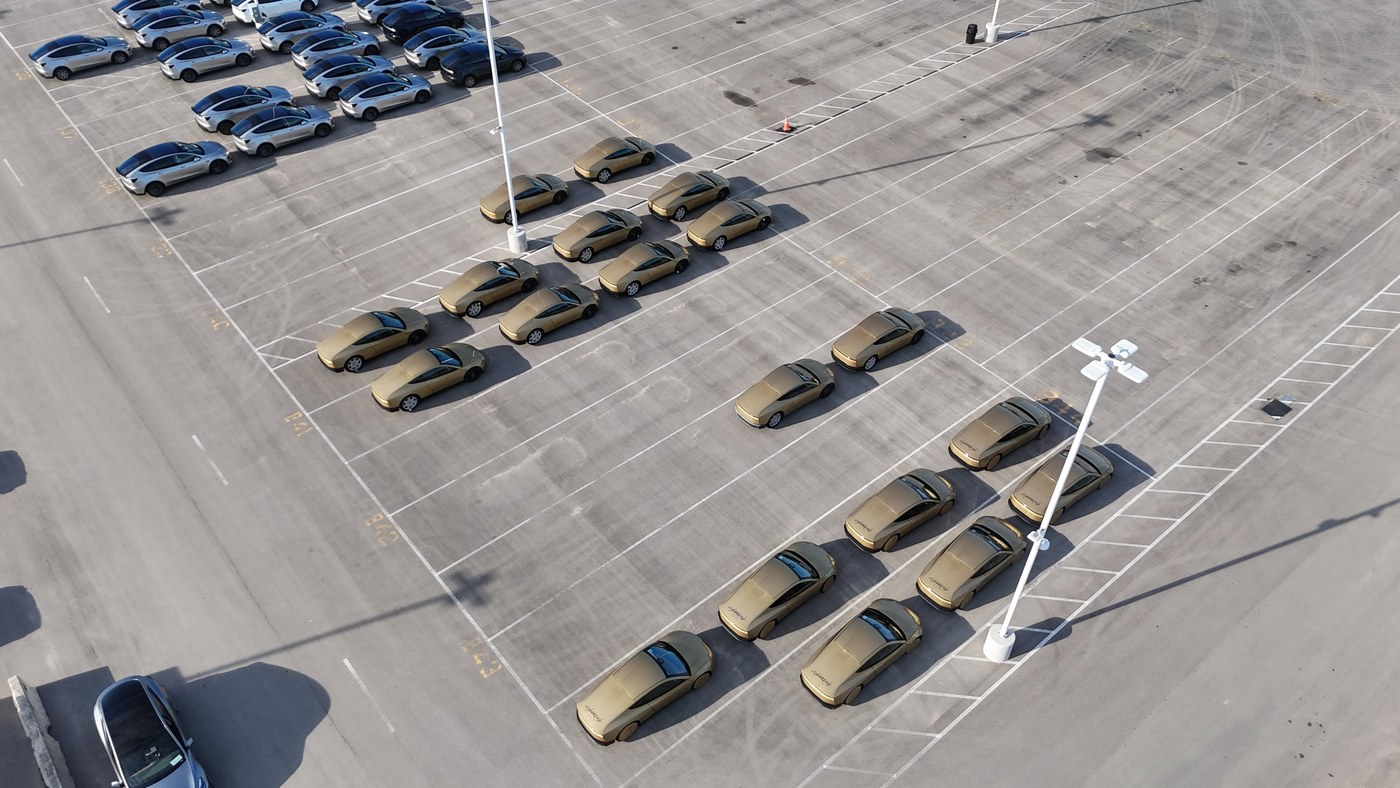
The two tracks answer different questions. The audit tests how today's Cybercab fits today's rules. The modernization work will shape how the purpose-built robotaxis that follow are certified from the start. Tesla has told NHTSA it plans to expand Cybercab gradually to more vehicles and locations, and a clearer federal path would make that expansion easier to plan.
Robotaxi Radar, an account that tracks Tesla's robotaxi rollout, flagged the notice on X on Tuesday and said the thing to watch is any timeline for changes to the brake pedal and steering wheel rules. That is the question to bring to Washington on 1 December. In the meantime, the cars are busy. Cybercabs continue to carry paying riders in Austin, and test units have turned up this month in Utah and the Boston area.