Latest · Breaking
In the Crash Lab, Cybercab Takes the Hits It Was Built For
Gail Alfar's Saturday X Article describes leaving a wheel-less Cybercab cabin and picking up a Model Y steering wheel again, one week after Austin launch.
AUSTIN, Texas - One week after Tesla opened Cybercab to the public here, the contrast lands in the body. Sit in a cabin with no steering wheel and no pedals. The doors lift. Nobody pretends you are still the backup driver. Then walk back to a Model Y, put hands on a wheel, and hover a foot over an accelerator - the old contract that the human will catch the mistake.
That lived split is the subject of Gail Alfar's X Article "Two Worlds, One Week After Cybercab," published Saturday as a link post from @gailalfaratx. Alfar was downtown for the Thursday, September 3 launch. She rode the unsupervised two-seater, stood in the packed launch room, then returned to a car that still has controls. Full Self-Driving, she wrote, made the gap between those worlds smaller. It did not close it. After launch week, she says the gap feels wider, not smaller.
Austin remains where the public can open the Robotaxi app and hail a Cybercab today. Alfar's piece is not a new city announcement or a fare table. It is a named Austin voice describing what it feels like to leave a wheel-less cabin and pick up a steering wheel again.
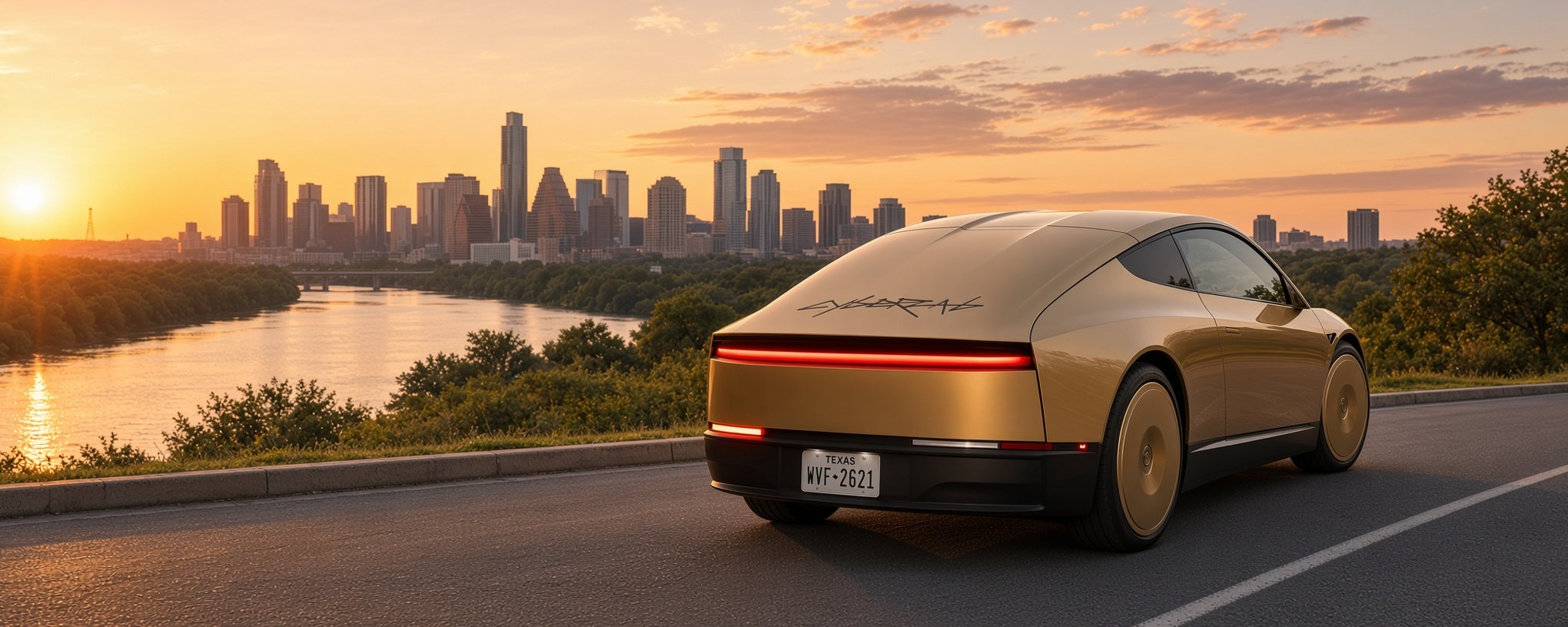
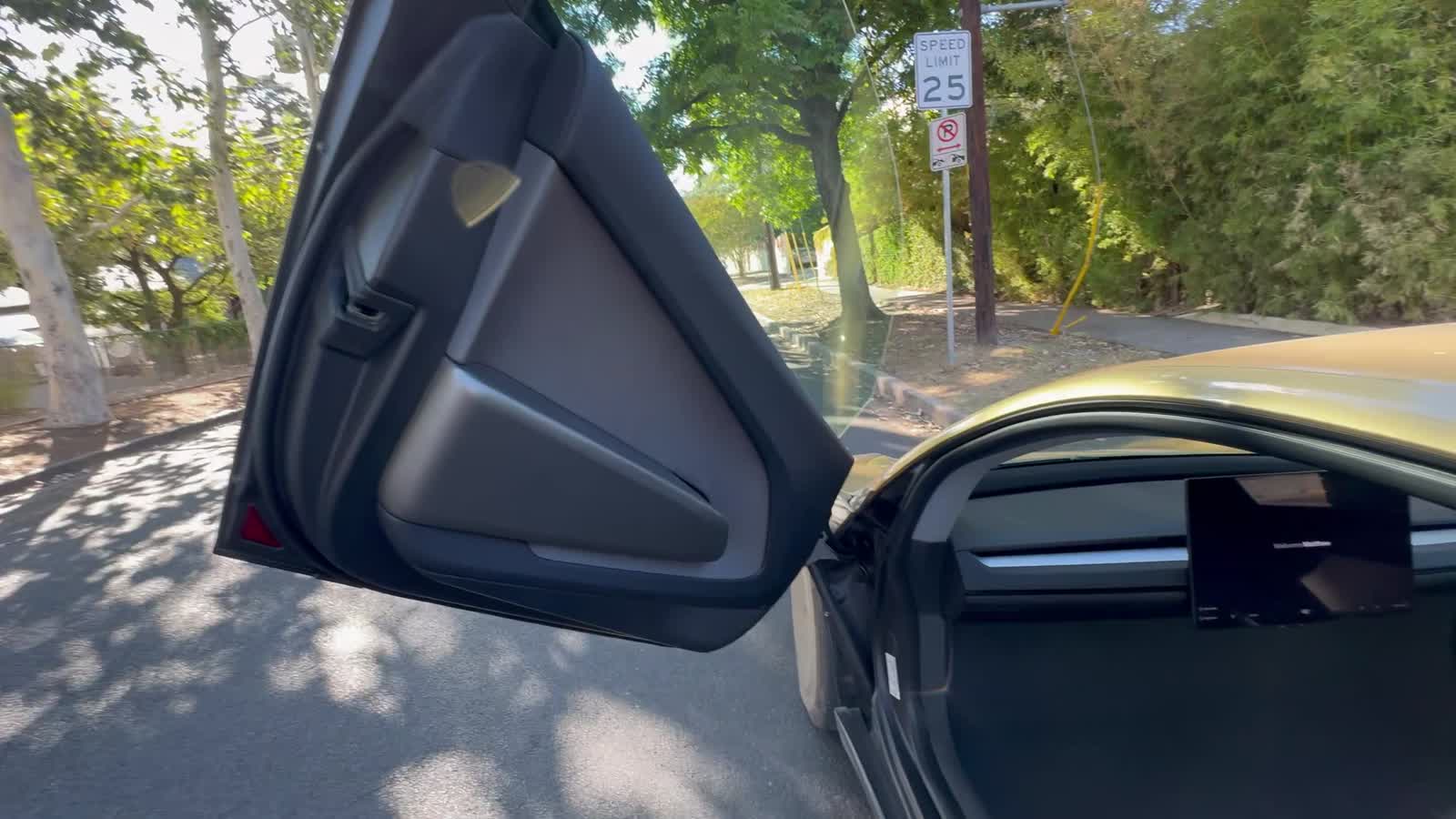
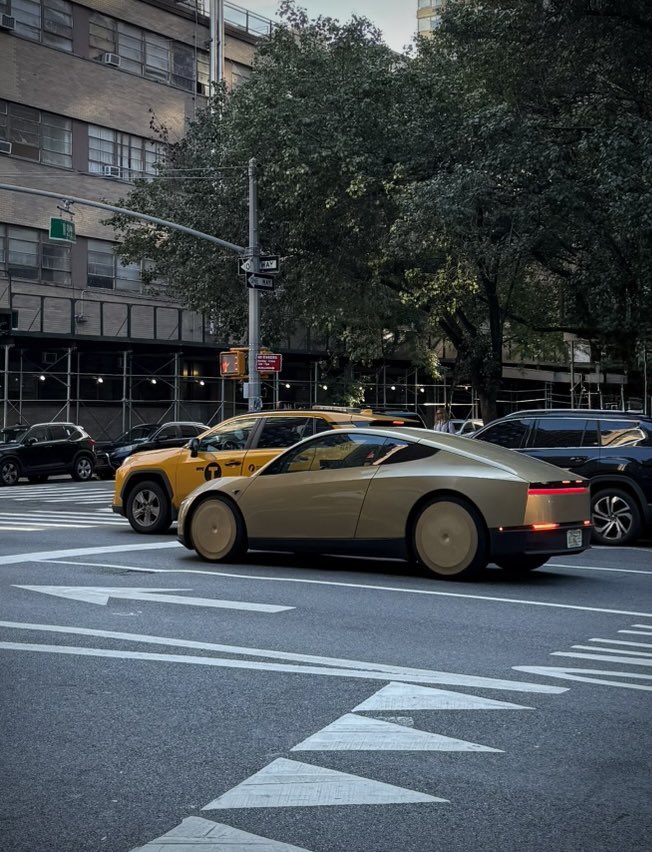
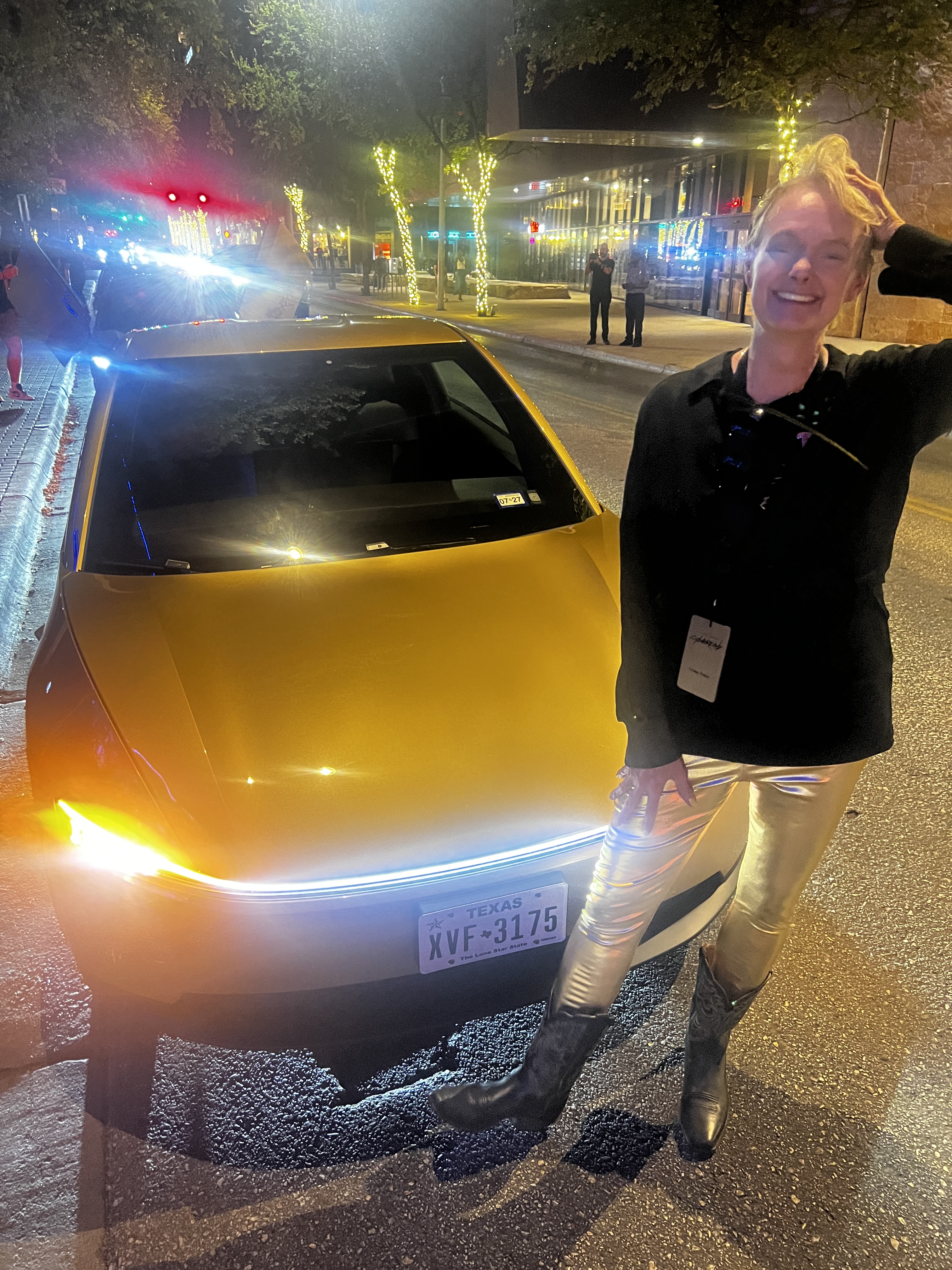
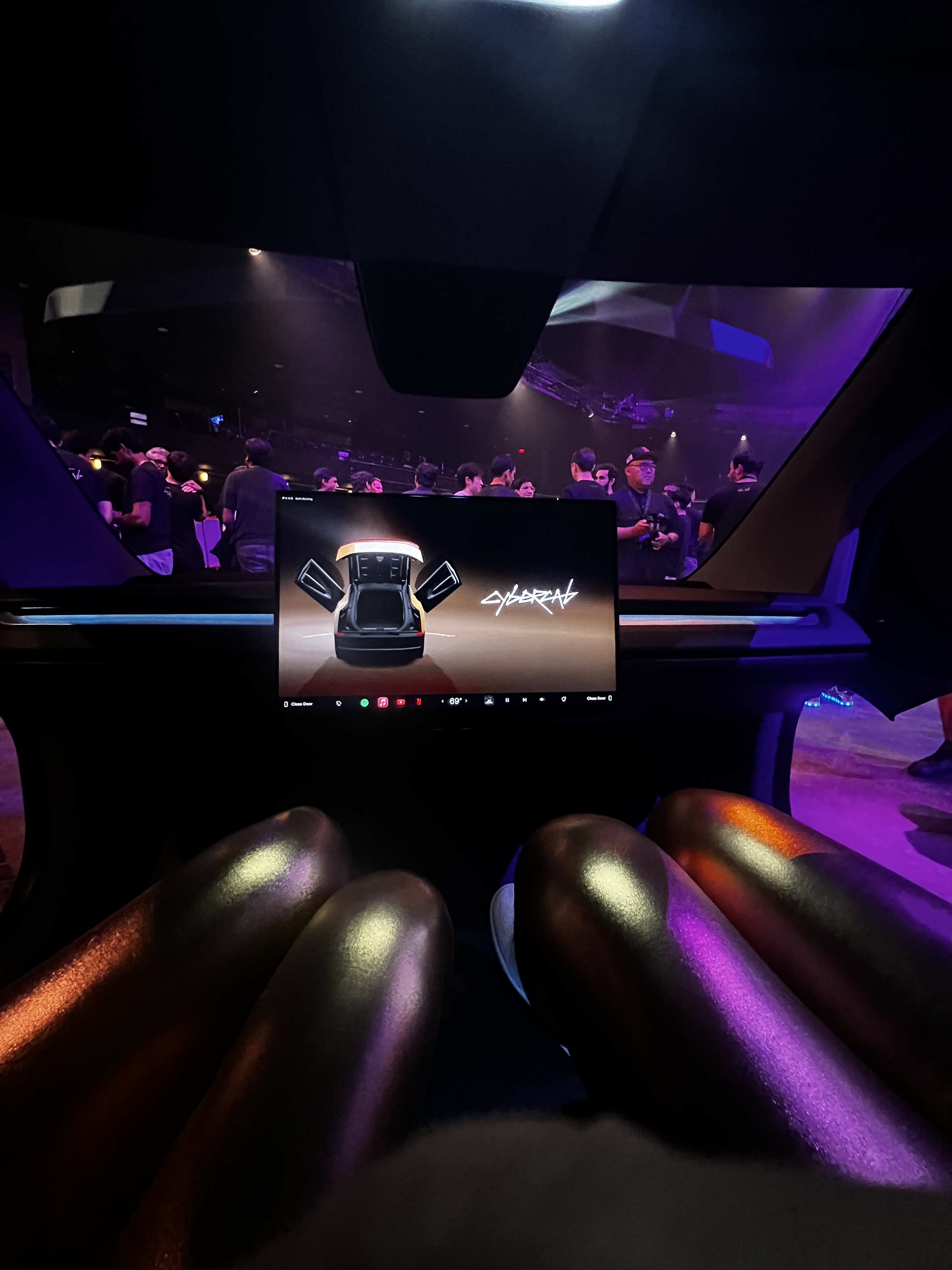
The photos do as much work as the prose. One night still puts a gold Cybercab on a downtown Austin street under tree lights, Alfar standing beside it in launch credentials. Another is a passenger POV of the empty dash: no wheel, no pedals, ambient strip, center screen with butterfly doors up. A third looks down at PRND and Self-Driving on the screen, open door framing a packed launch floor. These are Alfar's September 3 stills, not stock renders.
Some of the pictures, she wrote, do not look like transportation. They look like they belong in a museum: the gold, the light bar, the empty place where a wheel is supposed to be. You can stare at the street photo and forget, for a second, that the same machine is already moving people around Austin. Her point is product. The car was not a regular sedan with the controls deleted. It was built for a different job.
The cabin switch is the essay's sharpest line. In the Cybercab there is nothing for your hands to do, she says. No wheel to hold "just in case." No pedal to hover over. There is a screen, two seats, and the city on the other side of the glass. Then you get out, walk back to a normal car, and your hands go looking for a wheel that is not in the last place you sat. That first-person report matches the unsupervised two-seater cabin photos.
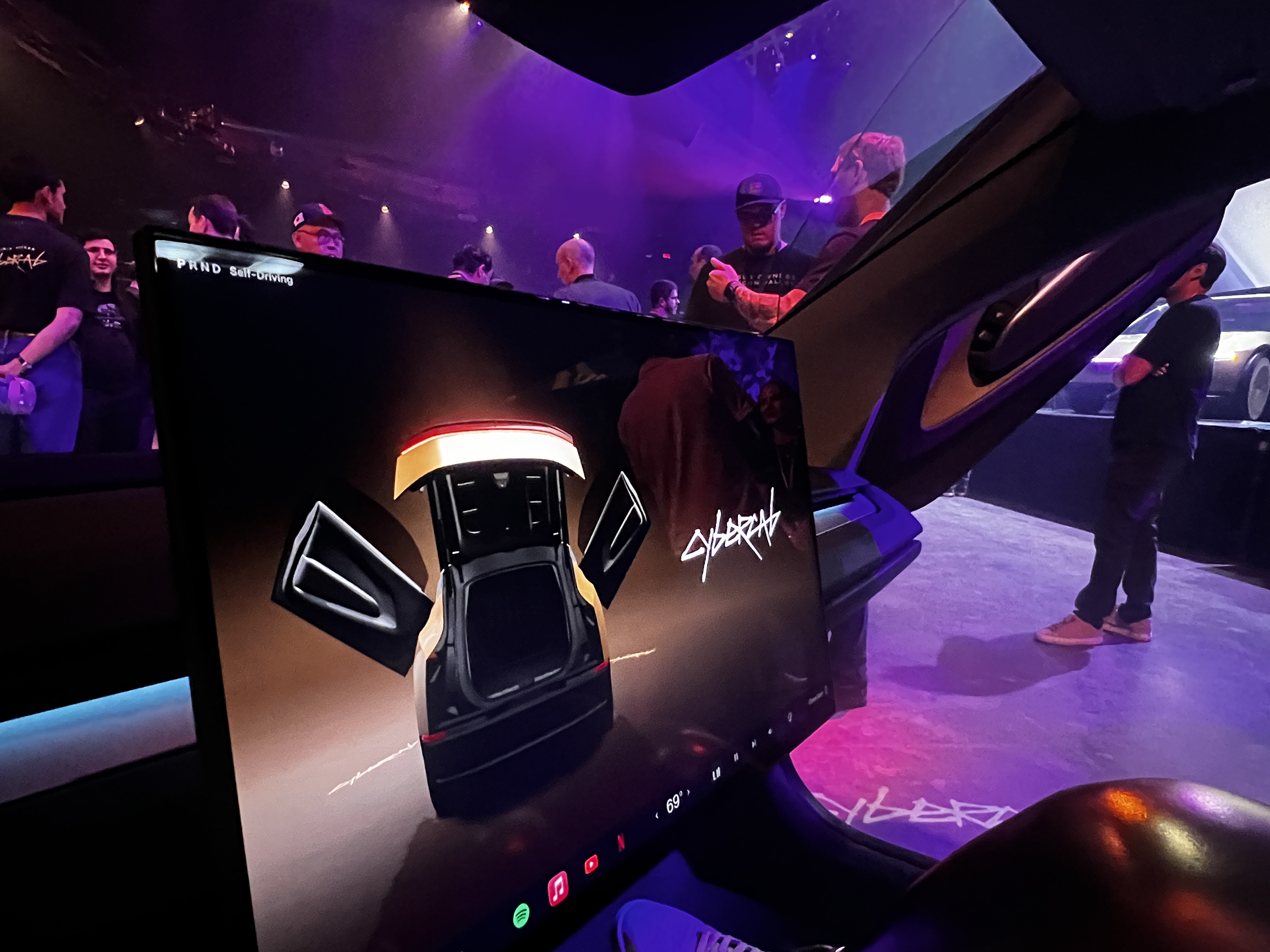
She also files the team half of launch night. Behind the glass, the room is packed: engineers, production, autonomy. Alfar wrote that Ashok Elluswamy and the team walked through what it took, and that Tesla Engineering talked through process - the unglamorous work that never makes a poster. No speech content is invented beyond what her Article states.
A separate still shows layered panels and structure on a table. Alfar calls that photo overwhelming in a different way than the street shot: design, tooling, build, and argument stacked so a room could see what purpose-built means. She ties the display to the purpose-built Starlink path she says will eventually come to all Tesla cars. That is her framing from the exhibit floor.
Other stills widen the night. One stage photo puts Alfar and Grace Alfar with Tesla team Eric near Cybercab Launch Day branding. Another selfie with Wes Morrill (@wmorrill3) catches a wall screen reading "The future is here" over gold robotaxis. A third shows Alfar beside an Optimus unit. She wrote that the night was not only a car. It was a room full of the next layer: the robot, the team, the gold taxis on the street outside. Coming home to a steering wheel after that, she says, is a strange kind of jet lag.
That jet-lag line is the hook that travels. Her hands still know where the wheel is. Her foot still hovers. Part of her brain, she wrote, is already living in the cabin with no controls. The rest of her is still licensed for the old world. She did not expect the split to feel physical. It does. If you only see the sculpture, you miss the team. If you only see the team, you miss how strange it feels to leave that cabin and pick up a steering wheel again. Both things are true, she says.
According to metrics on the Saturday tweet at the time of reporting, the thin link post had drawn about 4,654 views, 13 likes, and 2 retweets. Those are attention numbers for the Article link, not a count of Article opens.
Keep this piece separate from Alfar's other recent Cybercab post. On Friday she shared a short mountain-road cabin video about challenging curves without a wheel. That tip is a different file. This Saturday Article is the launch-week reflection: two worlds, downtown gold taxis, empty cabin, Optimus, and switching back to a Model Y.
What the piece does not claim is also worth noting. There is no new city for public hail. There is no invented Ashok quote beyond Alfar's statement that he and the team walked through what it took. There is no invented ridership number. There is no claim that Full Self-Driving on Model Y is obsolete. Alfar's Model Y is still the daily second world. Cybercab is the unsupervised cabin that made the contrast feel sharper after September 3.
The vehicle in her stills is the dedicated wheel-less two-seater. Her Model Y remains the car with the wheel she returns to. Austin stays the live public hail market. The value is human and local: a launch attendee explaining why the sculpture and the team both matter, and why leaving the cabin still feels like jet lag from the future.
Credit for the Saturday X Article and launch-week photos goes to @gailalfaratx on X. Article title for context: "Two Worlds, One Week After Cybercab." Tip: https://x.com/gailalfaratx/status/2098610966896283733.
Harper Quinn is a senior correspondent covering Robotaxi launches, Austin fleet ops, and the day-to-day of Cybercab rides. Previously reported transport and consumer tech for independent trade titles; based in Austin.