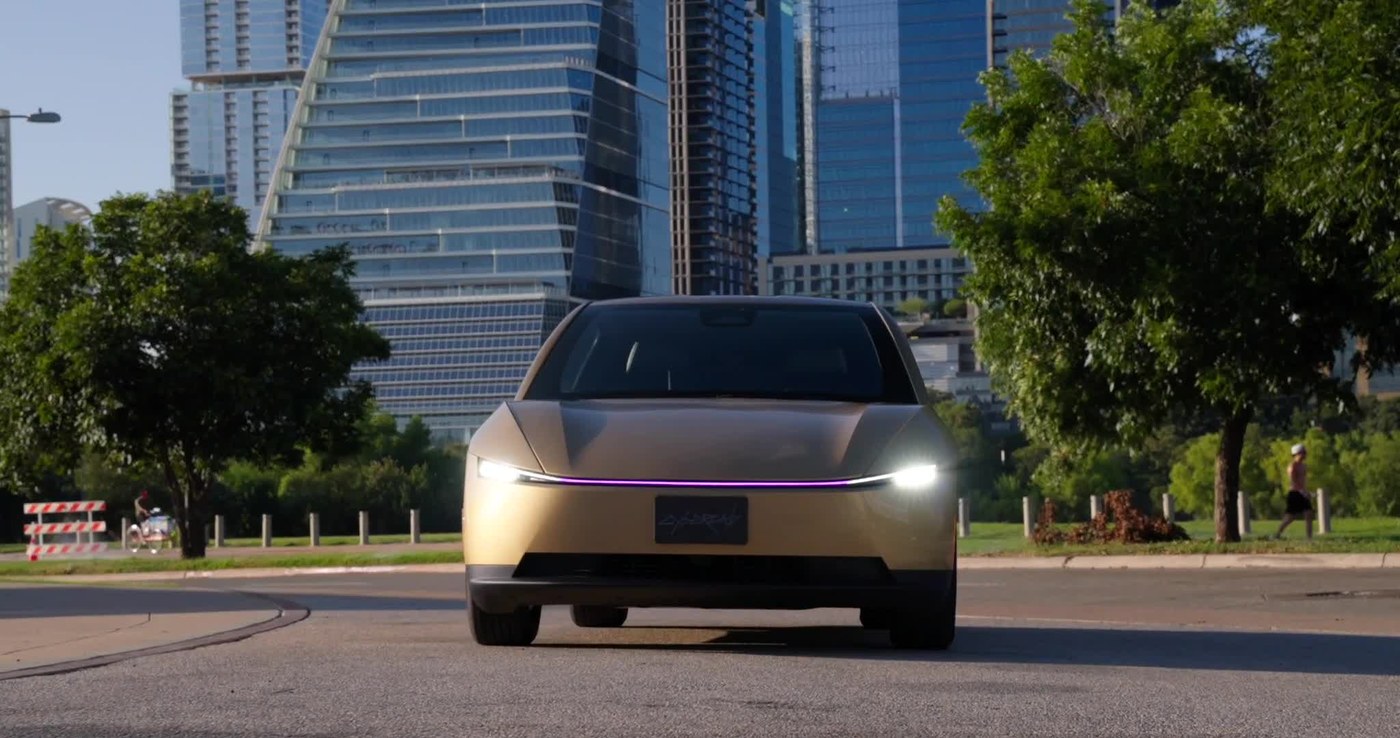
TECH · Tech
Third Time's the Charm: A Cybercab Works Its Way Past a Blocked Austin Street
A rider's video from early Monday shows a driverless Cybercab meet a utility crew's cones, circle back twice and roll on once a worker cleared the lane. The detour pushed the arrival estimate back about seven minutes.
Sam Ellison, Live desk
Published · 3 min read
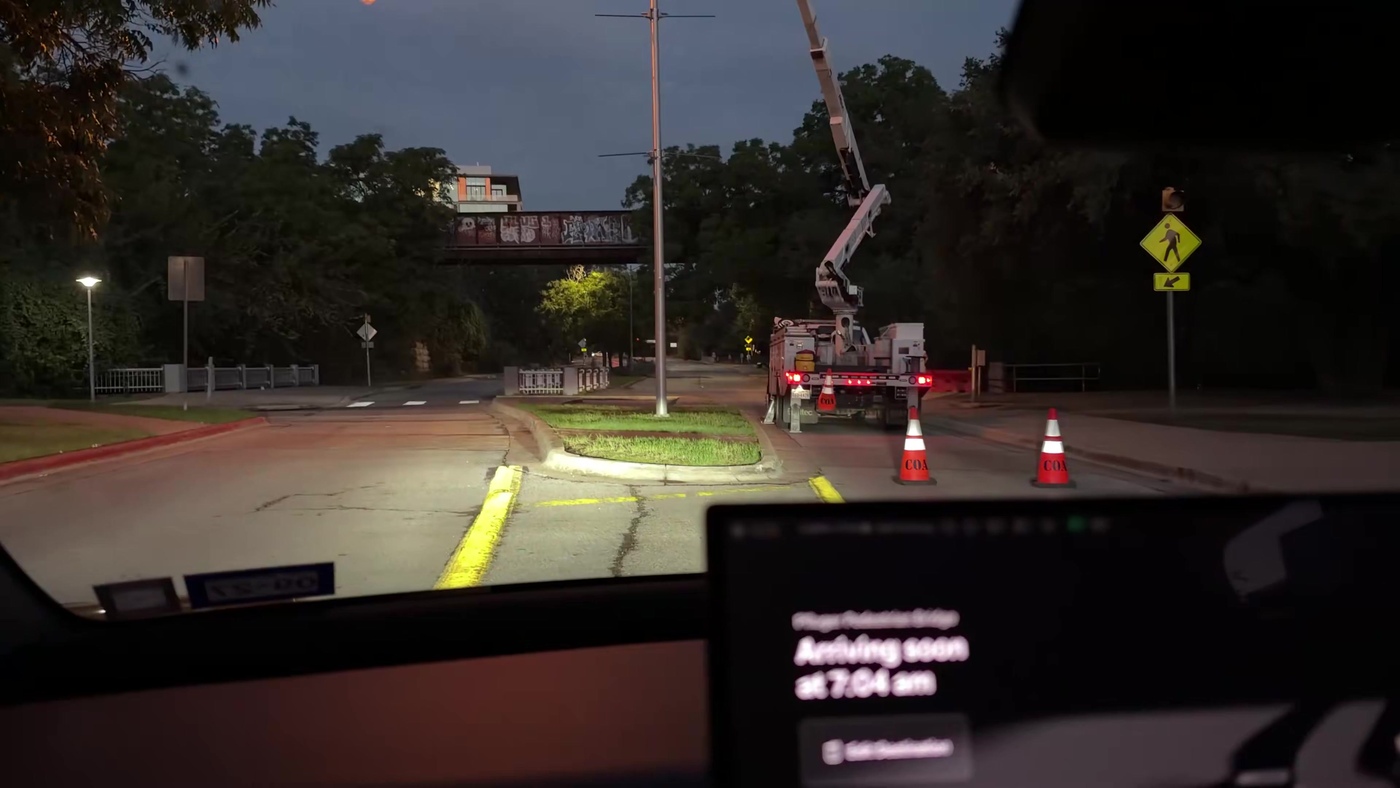
AUSTIN, Texas - Early on Monday, a Cybercab rider got a close look at how the car handles a street it cannot use. The rider, David Moss, a creator who posts self-driving videos on X and YouTube, was headed for the Pfluger Pedestrian Bridge near downtown Austin when the cab came up on a utility bucket truck working on a streetlight, with orange cones set out across the lane.
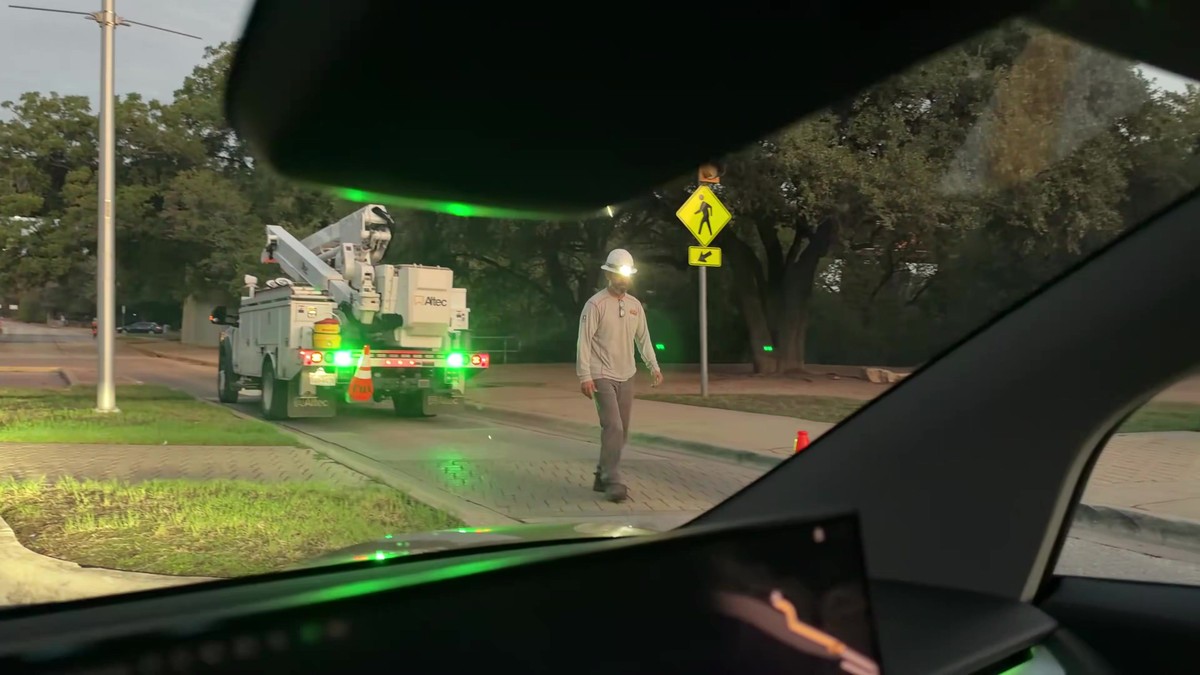
His eight-minute video, filmed from the passenger seat, shows what came next. The cab did not try to squeeze past the cones. It took another route around the block and came back to the same blocked spot, then did it a second time. The cabin screen showed the car in Self-Driving mode, and its arrival estimate slid from 7:04 a.m. on the first approach to 7:11 a.m. by the third.
On the third pass, the worker pulled the cones. Robotaxi Radar, an account that tracks Tesla's driverless rollout and shared the clip, wrote that the Cybercab "reacted as soon as the road cleared" and continued the trip.
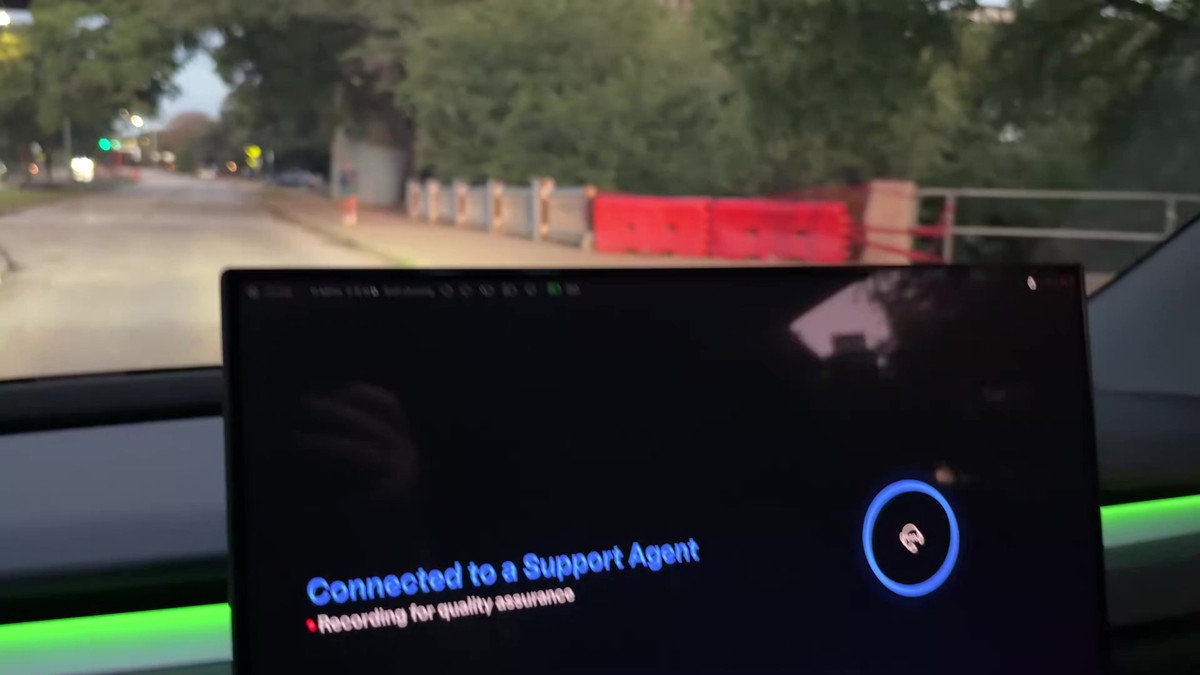
Near the end of the ride, the screen read "Connected to a Support Agent," with a note that the call was being recorded for quality assurance. Radar said support checked in after the fact, "by which point the cab had already made the right call."
Moss gave the ride a passing grade. "In my opinion the car did everything it could up until the very end when the power utility truck was moving," he wrote. He said that last moment "could have been a bit better," and signed off with a thumbs-up.
Engineers call moments like this edge cases. A work crew that blocks a lane for a few minutes is routine for a human driver, who can wait or ask the crew how long they will be. A driverless car has to decide on its own whether to hold or reroute, and its map does not know that the lane is closed.
Radar suggested a fix. The software could flag a blocked stretch of road and leave it off the next route for a set time, either for that one ride or across the whole fleet. Tesla has not said how its system treats a closure like this one.
The safety call was the right one. The car stayed out of the work zone and moved on once the way was clear. The cost was time, about seven minutes on a short morning trip, and smarter rerouting would win most of that back.
Austin is the only city where the public can book a Cybercab ride, and riders there are seeing more of the cars than ever. Each odd street like this one adds to the public record of how the car behaves when the road does not go to plan.