Production · Feature
Unboxed: how Tesla wants to stamp a robotaxi in four pieces
The Cybercab’s price target lives or dies in the body shop Tesla is trying not to build.
Tesla’s pitch for the Cybercab has always been a number wearing a car: less than $30,000 to build, at volume, without a conventional body shop. The method has a name Tesla likes — unboxed — and a diagram that looks like a toy that snaps together in four large pieces instead of a thousand small ones.
Traditional auto plants are cathedrals of incrementalism. A body-in-white moves down a line. Robots weld. People fill gaps. Unboxed manufacturing tries to build major modules in parallel and marry them late, which is how you get cost out if you can hold tolerance. If you cannot, you get scrap and a keynote that aged badly.
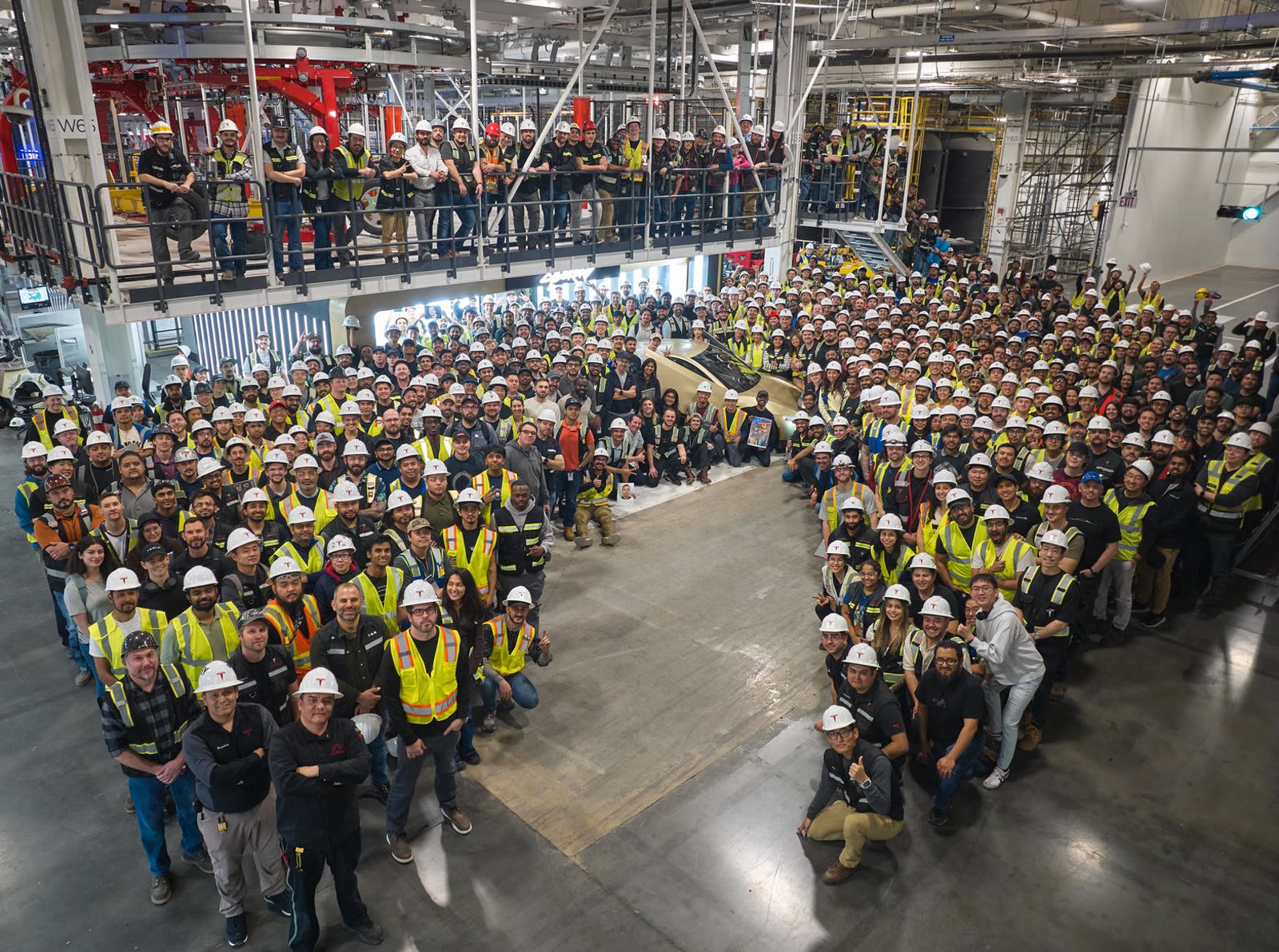
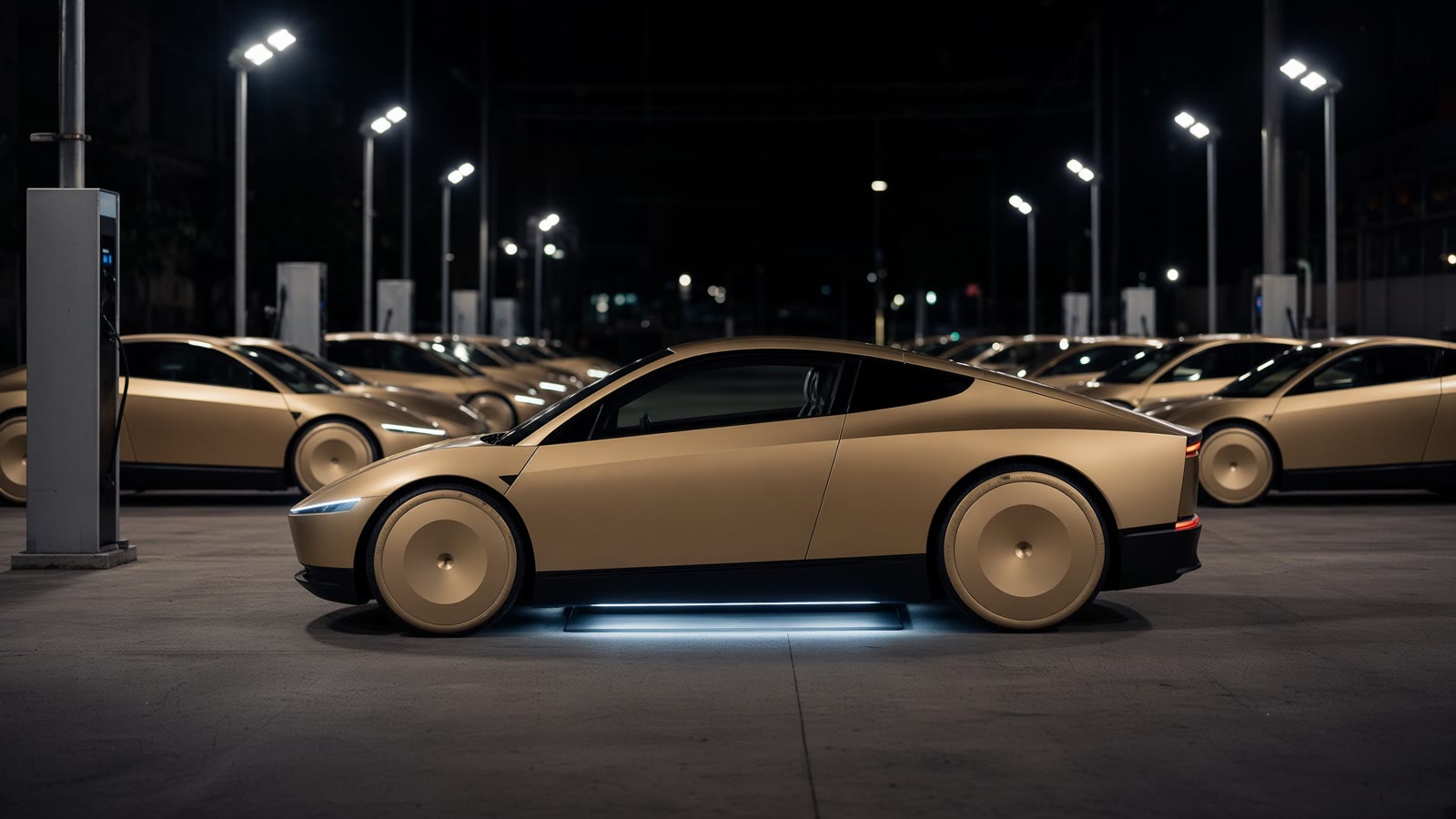
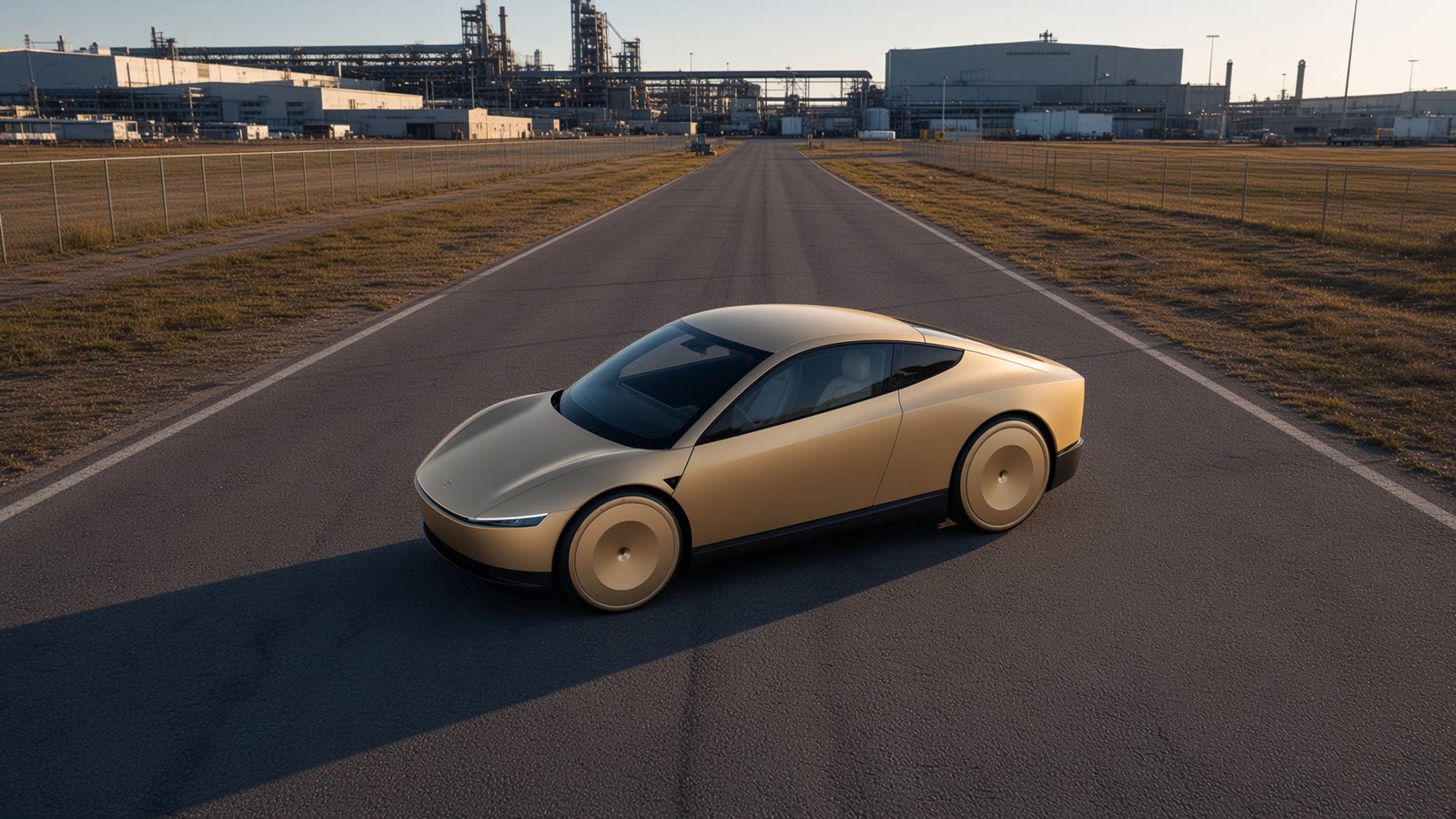
Giga Texas is the test stand. The first production unit in February was a ceremony. The hundreds of cars on the test loops this summer are the exam. You cannot fake a fleet of gold coupes from a handmade bucks. You can, however, build a few hundred and still be nowhere near the rate that makes $30,000 real.
Watch the doors. Watch the lightbar alignment. Watch whether the champagne paint matches the aero discs from car to car. Those are the tells of a process that is either locking in or being walked back toward a normal line. The Sept. 3 cars will be the ones Tesla is willing to photograph. The interesting Cybercabs are the ones doing laps behind the plant, where nobody sent an invite.