ROBOTAXI · Robotaxi
Robo Riches: ARK Says Robotaxis Will Be 80% of Tesla's Value by 2031
ARK Invest's new Tesla model sees about 8.1 million robotaxis on the road by 2031, and says the Cybercab helps give Tesla a per-mile cost edge of about 40% over Waymo's next robotaxi.
Sam Ellison, Live desk
Published · 3 min read
Wall Street's best-known Tesla bull has run the numbers again, and the robotaxi is still the whole ballgame. ARK Invest's updated open-source Tesla model, published on Monday, says robotaxis will make up about 80% of Tesla's enterprise value in 2031.
The firm's base case puts Tesla's share price at about $4,400 in 2031, a market value of roughly $17.5 trillion. Its bear and bull cases, the 25th and 75th percentile outcomes of a simulation that draws on 32 separate inputs, land at about $3,300 and $5,000 a share.
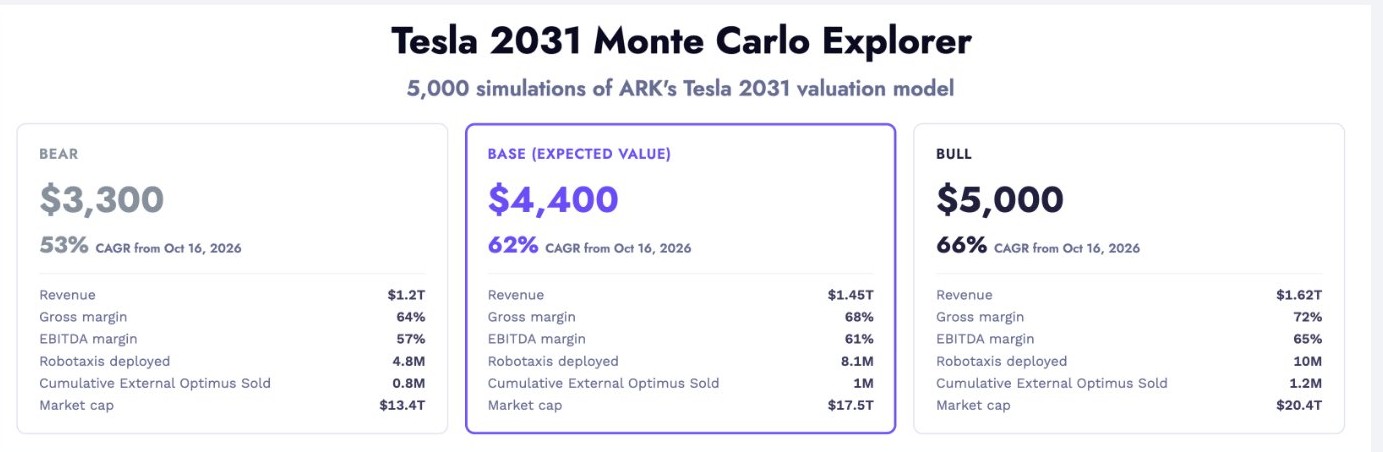
At the heart of that forecast is a fleet. ARK's base case has Tesla deploying about 8.1 million robotaxis by 2031 and earning about $753 billion a year in net ride-hail revenue. In the bull case the fleet reaches 10 million vehicles and $899 billion. Even the bear case puts 4.8 million Tesla robotaxis on the road.
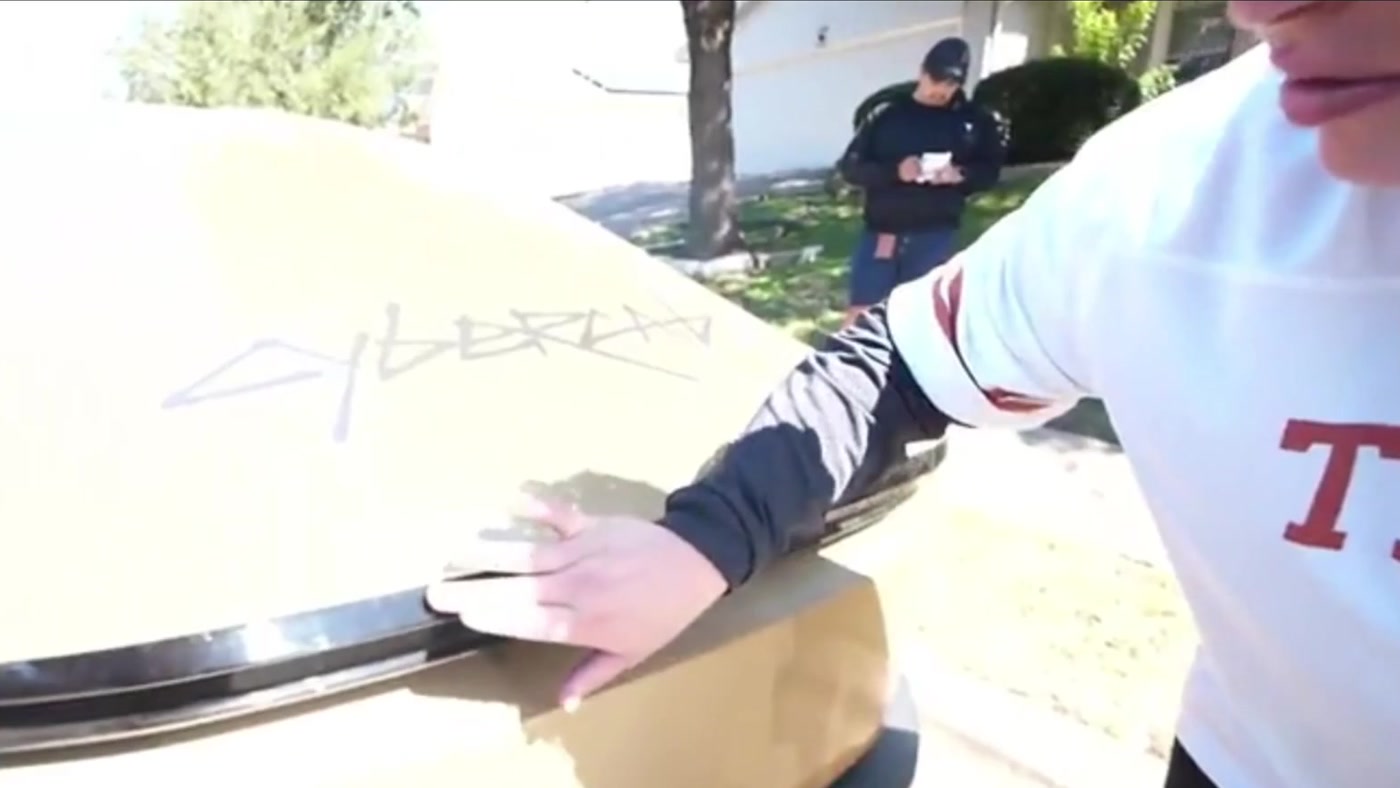
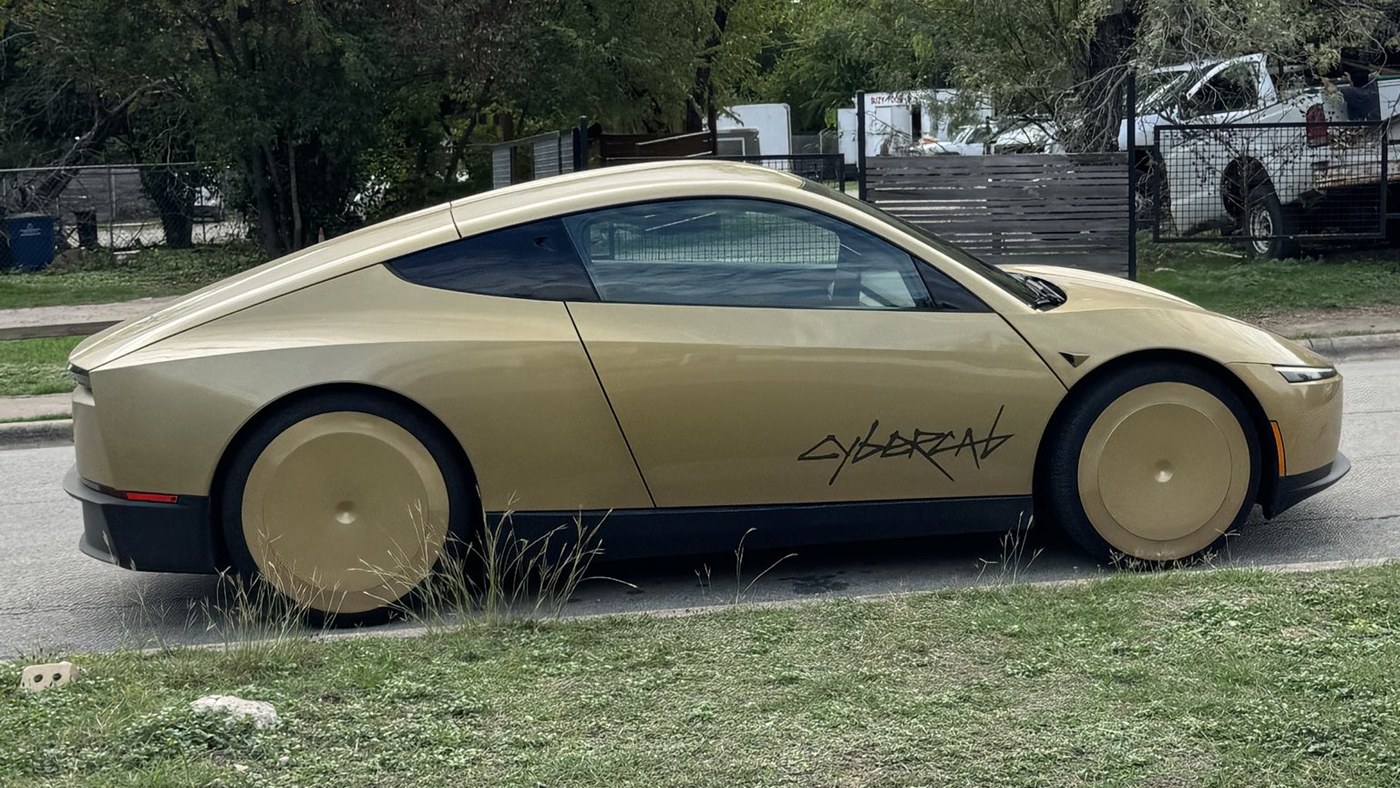
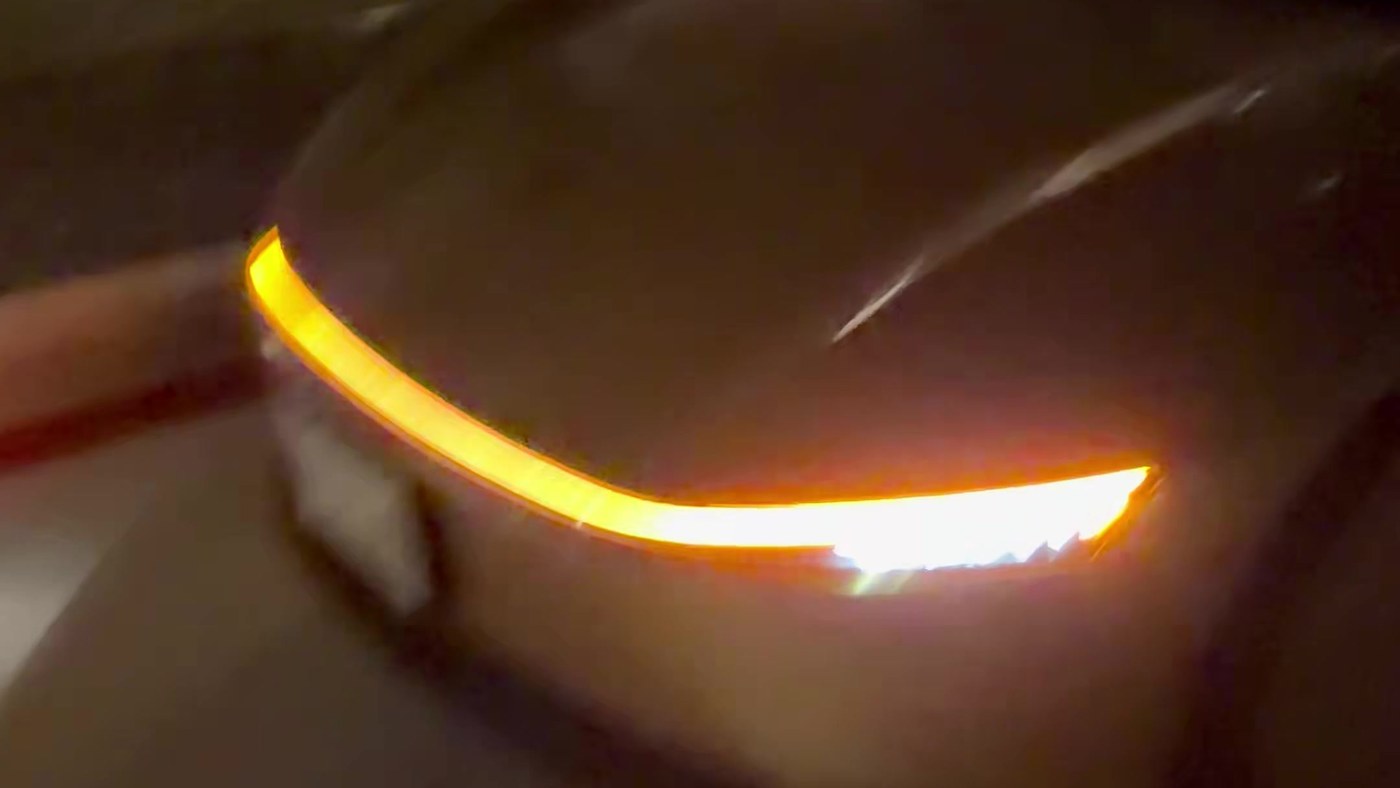
The Cybercab is a big part of the argument. ARK notes that Tesla has added the purpose-built two-seater to its robotaxi fleet, and says Tesla's vertical integration and camera-only approach to self-driving should leave its operating cost per mile about 40% lower than that of Waymo's next-generation robotaxi at the same level of use. Tesla could also bring customer-owned cars onto the network, ARK adds, which would push costs lower still.
The firm also points to how quickly the service has grown since it opened in Austin in June 2025. Tesla now runs Robotaxi in seven cities across three states and has logged more than 1 million unsupervised driverless miles in about seven months, which ARK says is roughly four times faster than Waymo's first million. Tesla has described FSD V15, expected late this year, as the key to scaling the service.
Robotaxis' share of the pie has slipped a little. In ARK's previous model, published in 2024 with a 2029 horizon, the business accounted for about 90% of Tesla's value. The firm says the change reflects Optimus, Tesla's humanoid robot, which it now expects to reach about 1 million external sales and about $212 billion in revenue by 2031. That is still far short of Elon Musk's own talk of 100 million to one billion Optimus units.
ARK's view of the ride market is broad. It argues that cheap, heavily used driverless cars can run profitably at fares below today's ride-hail prices, opening on-demand rides to far more people, and it left surge pricing out of the model to stay conservative.
The firm is open about where it stands. ARK calls its forecasts hypothetical, says they reflect its long-term positive view of the company, and names a slower robotaxi ramp, caused by regulatory delays or unexpected events, as the main risk. It has posted the full model on GitHub for anyone to test.
The timing is pointed. Tesla reports third-quarter results after the US market close on Wednesday, and Robotaxi and Cybercab questions sit near the top of the list investors have submitted for the call.
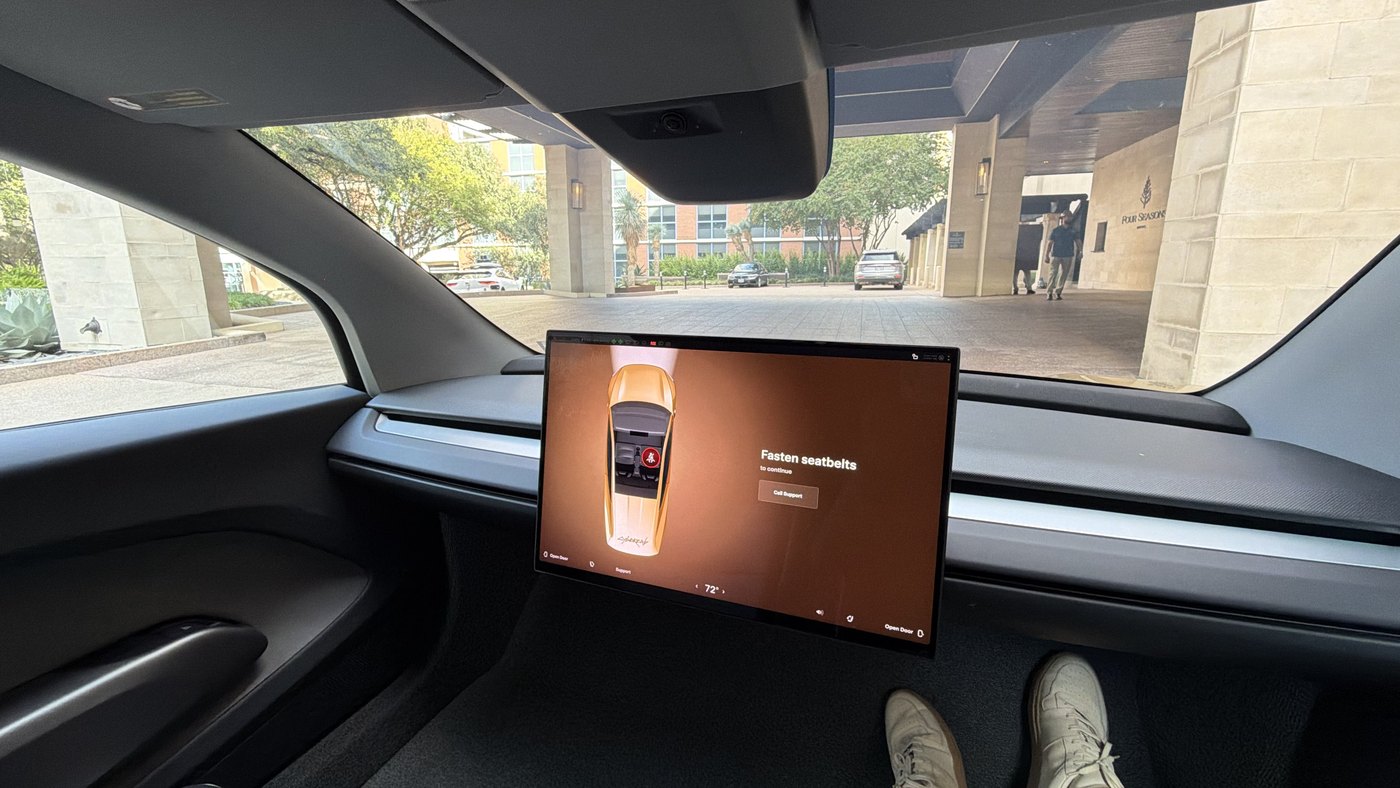
In Austin, where riders can already hail a Cybercab with no steering wheel or pedals, a fleet of 8 million sounds a little less like science fiction every week. ARK is betting most of Tesla's future rides in that back seat.