AUSTIN · Austin
One Worker, Ten Robotaxis: How Tesla Plugs In Its Driverless Cybercabs
A video from an Austin Supercharger shows a driverless Cybercab and nine Model Y robotaxis parking themselves while one Tesla employee plugs each in. Wireless charging pads are the long-term plan.
Harper Quinn, Live desk
Published · 3 min read
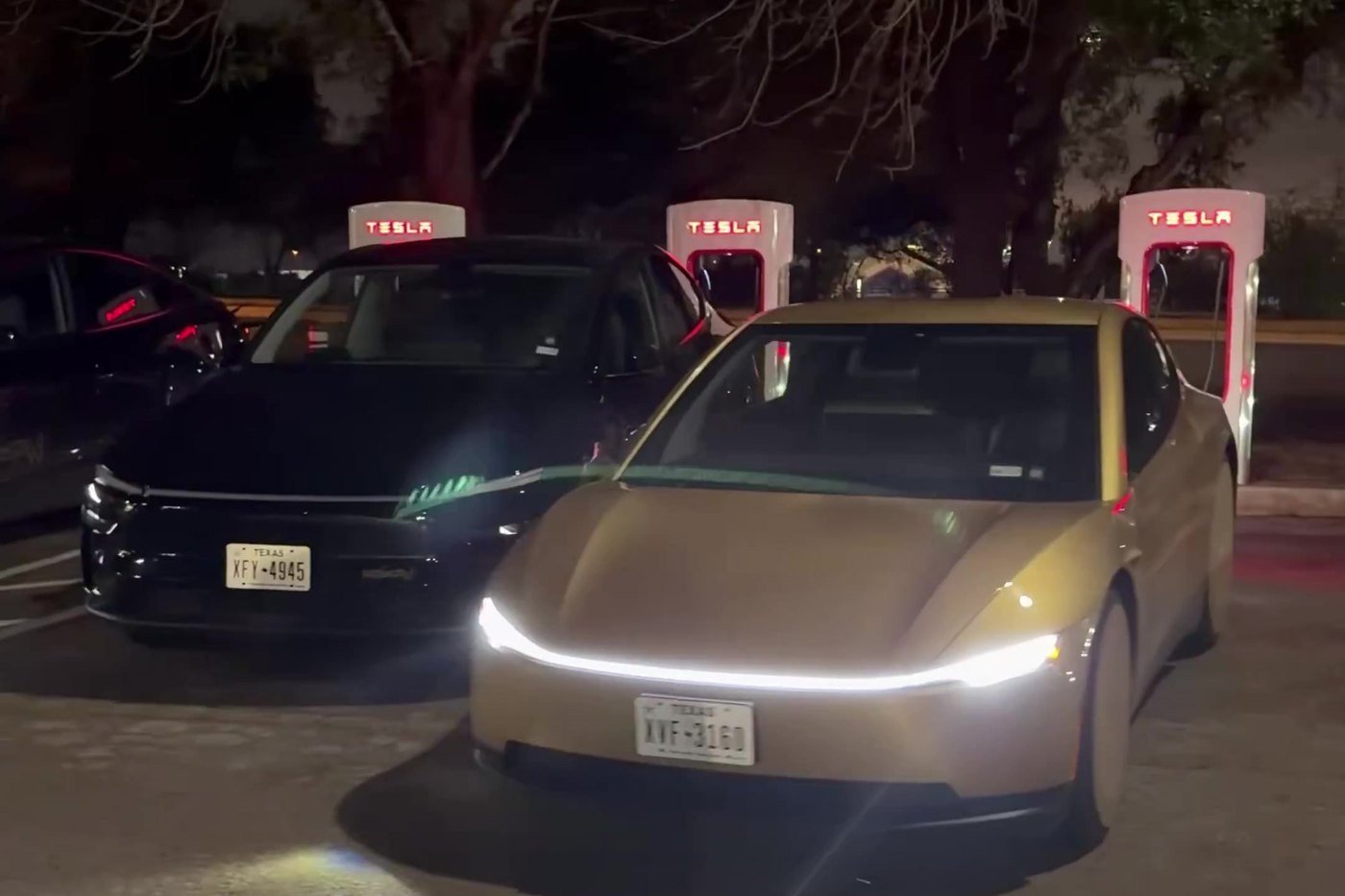
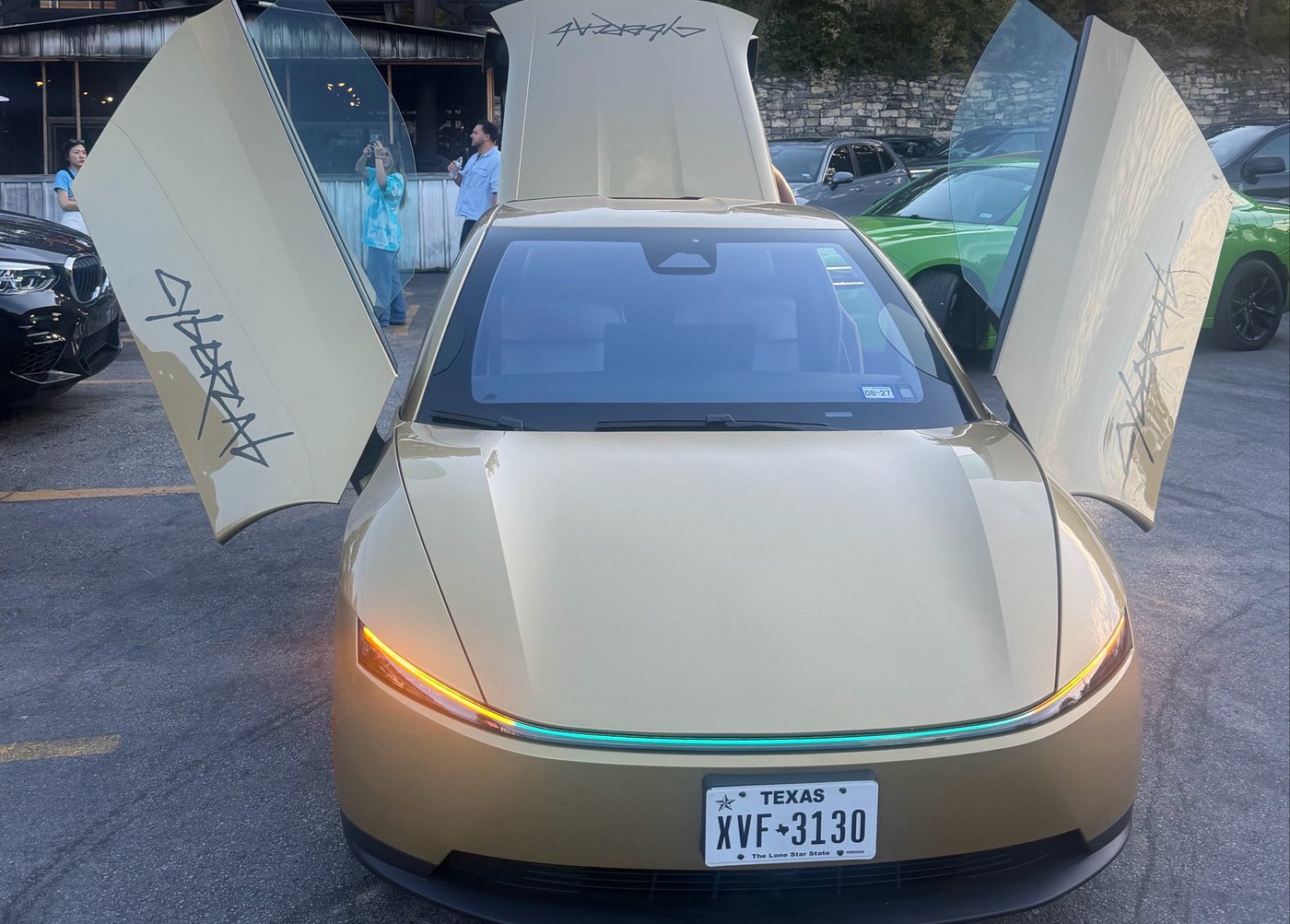
AUSTIN, Texas - The cars drive themselves to the charger. A person still plugs them in, and right now one person is enough for a whole row. A video filmed at a public Supercharger in Austin shows a gold Cybercab with nobody aboard rolling into the lot at night, followed by nine driverless Model Y robotaxis, while a single Tesla employee walks the line and connects each car to a stall.
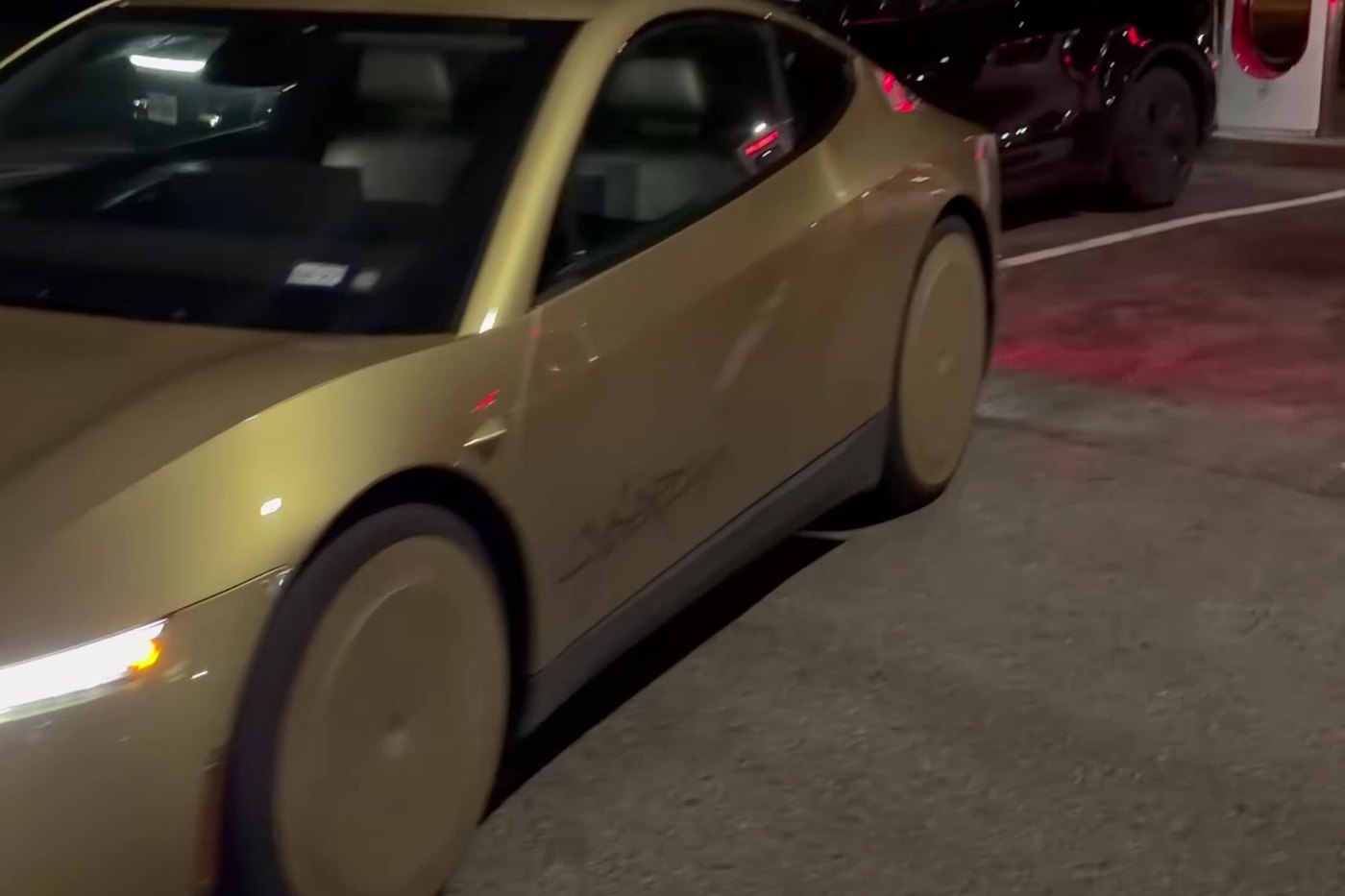
The clip was posted on X by Abhimanyu Yadav, who films Austin's Robotaxi fleet as @WorldlyReviewer, and it has passed 280,000 views. Not a Tesla App wrote it up on Monday. "This is how Tesla charges unsupervised robotaxis at a public supercharger," Yadav wrote. "A Tesla employee is walking around and plugging each of them in. She also moves the cars if they are not positioned well enough to charge." His verdict: "I love this process. One person charges multiple robotaxis at once."
The Cybercab reverses into its stall rather than nosing in. Its NACS charge port sits behind a small drop-down door in the corner of the rear bumper, so backing in puts the plug within reach of the Supercharger cable.
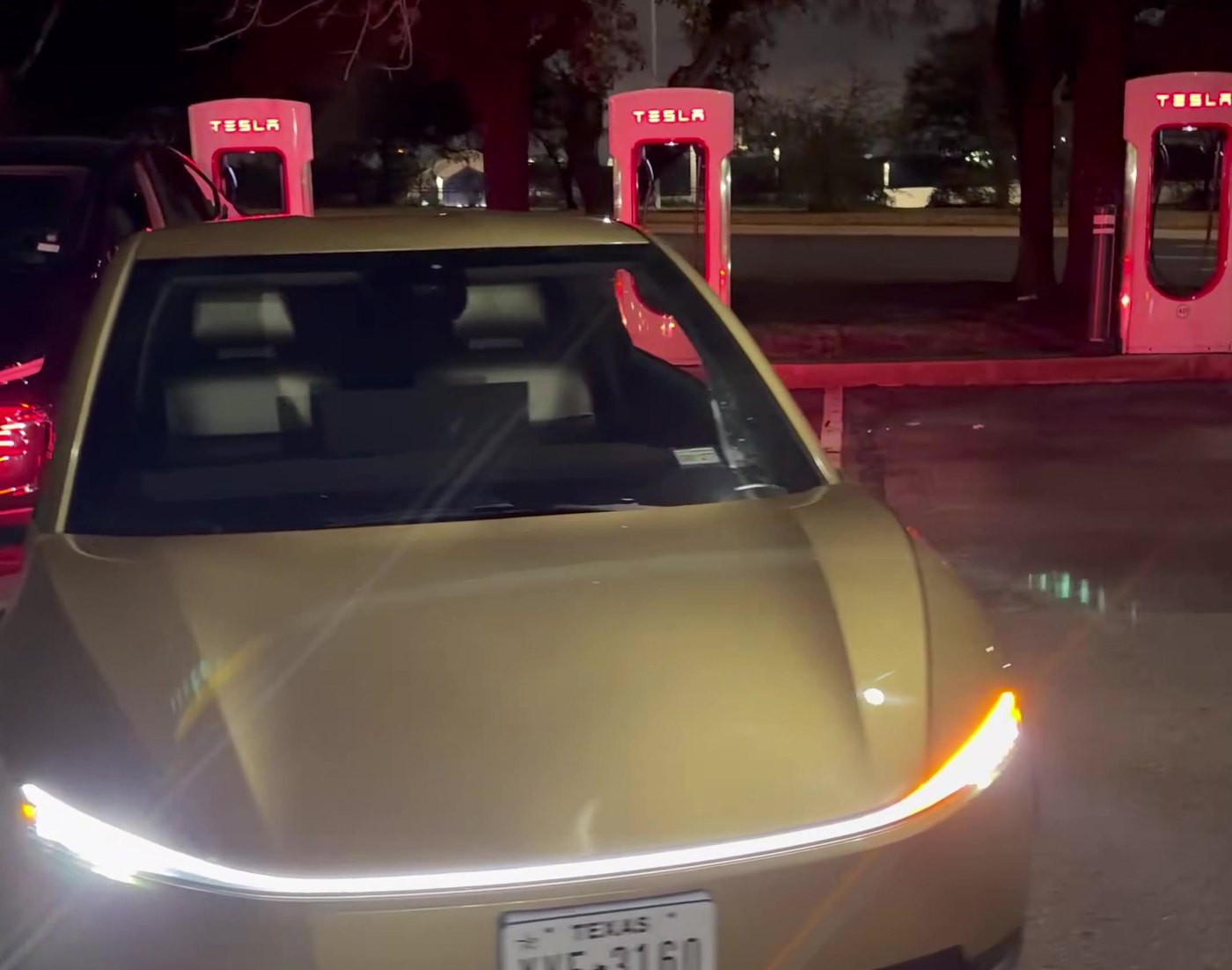
Superchargers are the Cybercab's only option today. The two-seater has no onboard charger for AC power, so a home Wall Connector or Mobile Connector will not work. It charges from DC fast chargers only, which suits a car built to spend its life in a fleet rather than a driveway.
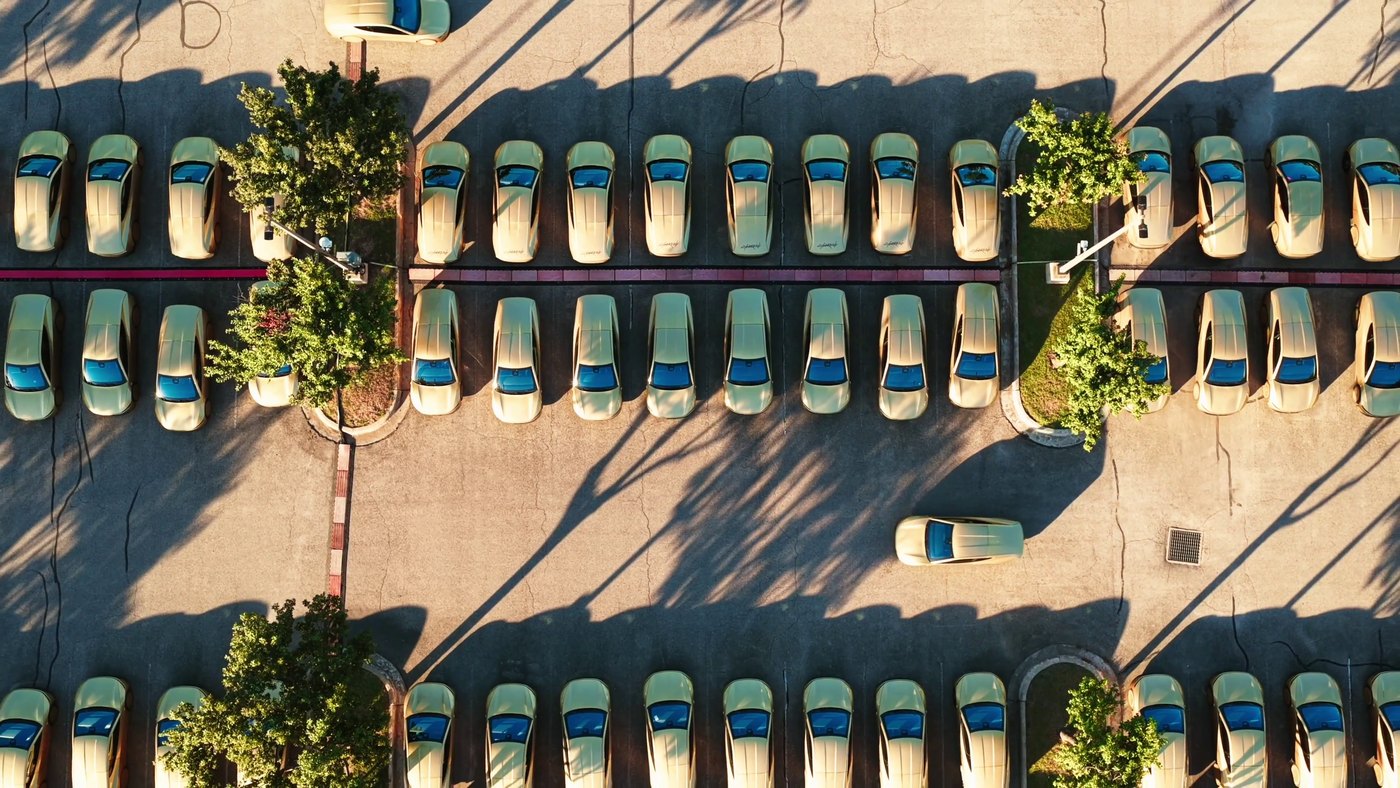
Not a Tesla App called the setup low-tech but sensible this early, and Teslarati compared it to the scrappy spirit of Tesla's Model 3 production push. It is also a sign of how quickly the fleet has grown. The Robotaxi service has been running for about 15 months, the Cybercab joined it in early September, and Tesla now has more than 300 Cybercabs in Austin across seven active Robotaxi markets.
The human step is not meant to last. Tesla plans to charge the Cybercab wirelessly using inductive pads, and it won FCC approval for the technology earlier this year. The car finds the pad over Bluetooth, then uses Ultra-Wideband radio to line itself up before power flows. Tesla has said the system runs at well above 90 percent efficiency.
Tesla is also building private charging hubs for Robotaxis only, including a planned Austin site with 80 wireless chargers. Until those come online, a night at the Supercharger will keep looking like the one in Yadav's video: a row of cars that drove in by themselves, and one person with a cable making the rounds.