Latest · Breaking
Cybercab Underprices Model Y by a Third in Austin
App screenshots for the same trip to Lustre Pearl East put the two-seater at $7.77 and Tesla's four-seat Robotaxi at $12.10 - early proof the purpose-built cab is cheaper to hail.
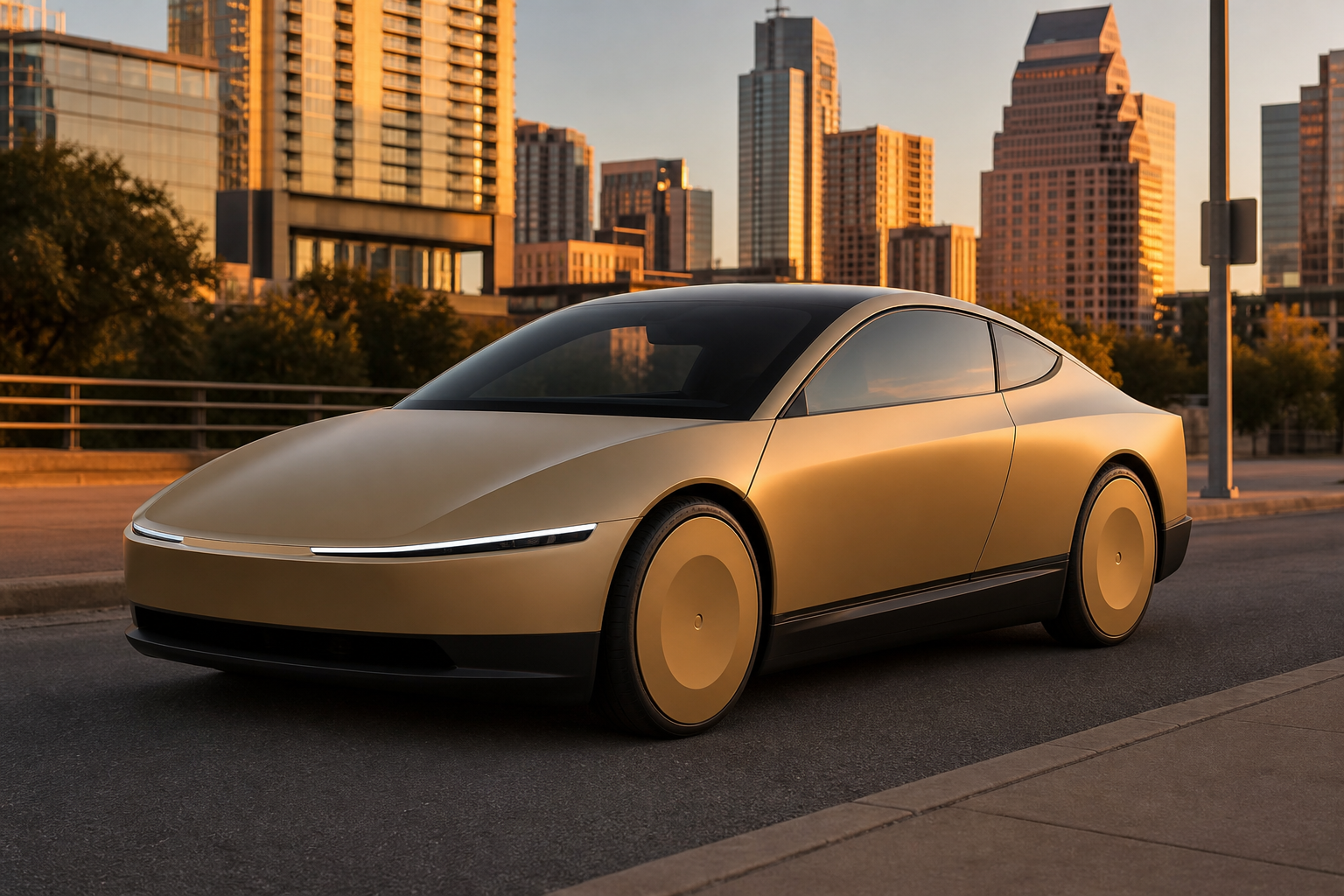
AUSTIN, Texas - The first hard fare comparison of Tesla’s public Cybercab week landed the way riders actually shop: same destination, same app, two vehicle types, two prices. On a route to Lustre Pearl East, community member David Moss posted screenshots showing a four-seat Model Y Robotaxi quoted at $12.10 and a two-seat Cybercab quoted at $7.77. That is roughly a 35 percent discount for choosing the purpose-built cab - and the first clear sign that Tesla is already passing some of Cybercab’s unit-cost advantage to people hailing rides in Austin.
Moss’s post on September 4 was blunt: Model Y rides were more expensive than Cybercab for the same distance. Not a Tesla App picked up the screenshots the same day, framing the gap as the commercial point of a car built without a steering wheel, pedals, or the weight of a family SUV. The desk is filing the numbers as a rider-reported app quote pair, not a Tesla press release. Tesla has not, in an official post reviewed for this story, published a separate Cybercab fare schedule. The app still shows the price before you confirm. What Moss captured is the live sheet for one corridor at one moment - and it favors the gold two-seater.
That matters because the Robotaxi app in Austin already asks riders to choose. After Exclusive Access and the public open, Cybercab sits beside Model Y as a selectable vehicle type, not a mystery upgrade that appears only after you book. Groups of three or more still need the Model Y. Solo riders and pairs can take the Cybercab. The fare gap turns that seating choice into an economic one. If the screenshots hold as a pattern, the purpose-built car is not only the stranger cabin - it is the cheaper hail.
Tesla’s own history made this outcome easy to expect and hard to prove until public bookings opened. When Cybercab was unveiled in October 2024, Elon Musk talked about operating costs at scale “probably going to be around 20 cents a mile.” The company is not at that scale in Austin. Texas registry counts that Cybercab.news has tracked still show dozens of Cybercabs beside hundreds of Robotaxi Model Ys. But the hardware brief - lighter curb weight, smaller battery class, modular construction, no driver cockpit - was always the argument for undercutting both traditional ride-hail and Tesla’s own retrofit fleet. Moss’s quote pair is the first public evidence that the argument is showing up as dollars on the confirmation screen.
Community speculation about the exact formula is already circulating. Earlier Robotaxi pricing in Austin had been described by trackers as roughly a $3.00 base plus about $1.40 a mile. Some riders now guess that Model Y robotaxis are carrying a higher base while Cybercab keeps the older, thinner one. Not a Tesla App noted that theory and correctly treated it as unconfirmed. The desk is doing the same. What is confirmed in the Moss screenshots is the all-in quote: $12.10 versus $7.77 for the same trip. Riders should still read the estimate in the app before they accept. Fares move with demand, distance, and time of day.
Demand is the caveat that keeps this from reading as a permanent coupon. In a separate weekend field note, EV reviewer Kim Java pulled ride history that showed surge flipping the usual comparison so Cybercab briefly looked dearer than Model Y on the same corridor - a scarcity signal, not a rebate. That does not erase Moss’s quieter snapshot. It clarifies the product. Cybercab is priced as the efficient two-seat option when supply is normal. When every gold coupe is busy, the app can reprice. The cheaper default still matters for how Austin will learn to choose.
The cabin that comes with the discount is the other half of the sale. Early riders and Tesla’s own materials describe a lounge built around a large center display, soft suspension over city pavement, and a deep rear trunk sized for airport bags. Accessibility details in the rider materials - wheelchair-height seats, wide butterfly doors, Braille on critical controls - sit beside the fare story rather than under it. The car is cheaper to hail in Moss’s example because it was engineered to be cheaper to run, not because Tesla stripped the cabin to a bare bench.
Competitive context helps. Tesla’s Model Y robotaxis were already undercutting much of traditional ride-hail in cities where unsupervised miles stacked up. Putting Cybercab underneath that floor, even by a third on one documented trip, is how a purpose-built fleet starts to look like a network product instead of a concept reel. Waymo and Zoox sell robotaxi rides with their own price and cabin patterns. Uber and Lyft still pay a human up front. Tesla’s bet is that a lighter car with no driver controls can win on both utilization and the confirmation screen. Friday’s public open put that bet in the app. Moss’s screenshots put a number on it.
Availability still shapes the experience. Requesting a Robotaxi in Austin does not guarantee a Cybercab. The fleet mix remains Model Y-heavy on the Texas books. Wait times, geofence edges, and the lightbar pickup cue all still decide whether the cheaper quote becomes a car that actually arrives. Tesla has not promised that every request returns a two-seater. It has only made the two-seater selectable - and, on Moss’s Lustre Pearl East route, cheaper.
For a desk that has spent launch week filing NHTSA audits, rare-earth-free motors, cleaning robots, and voice control, the fare gap is the consumer story that was missing. Regulatory fights and engineering notes matter. So does the moment a rider sees two prices for the same street and picks the gold coupe because it costs less. That is how a robotaxi product leaves the invite list and enters ordinary Austin habits.
Cybercab.news is treating the Moss quote pair as the clearest public Cybercab-versus-Model-Y fare evidence yet, credited to his September 4 post and the Not a Tesla App write-up that amplified it. Tesla can still publish an official schedule tomorrow and move the numbers. Until then, the instruction for riders is the one the app already forces: look at the estimate, choose the vehicle, and remember that in Austin the purpose-built cab is not only hail-able - on at least one documented trip, it is the bargain.
Harper Quinn is a senior correspondent covering Robotaxi launches, Austin fleet ops, and the day-to-day of Cybercab rides. Previously reported transport and consumer tech for independent trade titles; based in Austin.
Source: David Moss (@DavidMoss) X post Sep 4, 2026 (pic.twitter.com/zUR3ebgNrz), reported by Not a Tesla App.
More on the wire
Breaking
No Wall Connector: Cybercab Is Built for Fleet DC, Not Driveways
Harper Quinn · 1d ago
Breaking
Cents on the Mile: Ming Maps Cybercab's $50,000 Head Start Over Rival Robotaxis
Harper Quinn · 1d ago
Breaking
Fake Warrant, Real Ride: Jeremy Judkins Scripts Grok Into a Cybercab Police Prank
Harper Quinn · 2d ago