Latest · Breaking
Can You Get Rich on a Cybercab?: Austin Math Puts Musk's $30K Pitch to the Test
Kim Java flew in undercover, rode the two-seater, and stress-tested Elon Musk's under-$30,000 car and $30,000-a-year pitch against deadhead miles and early fares.
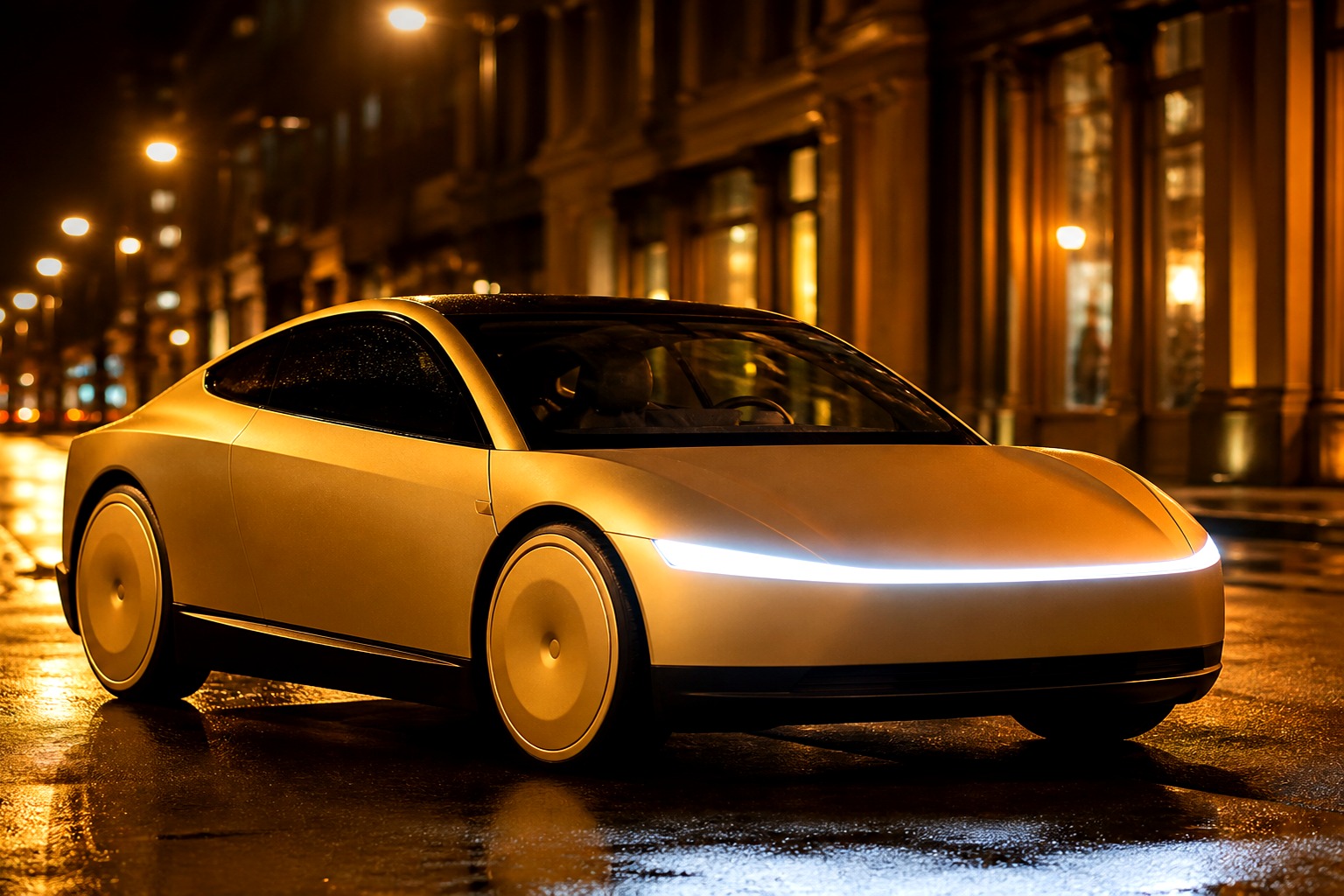
AUSTIN, Texas - The question landed on X Saturday afternoon like a stock-ticker tease: Can you actually get rich with Tesla's Cybercab? Kim Java, the Atlanta-based EV reviewer who posts as @ItsKimJava, said she investigated. By evening the clip had crossed roughly 70,000 views, and the fuller YouTube cut made clear what she meant. She flew into Austin, rode the purpose-built two-seater with no steering wheel and no pedals, and tried to turn Elon Musk's old ownership pitch into a spreadsheet a business owner could survive.
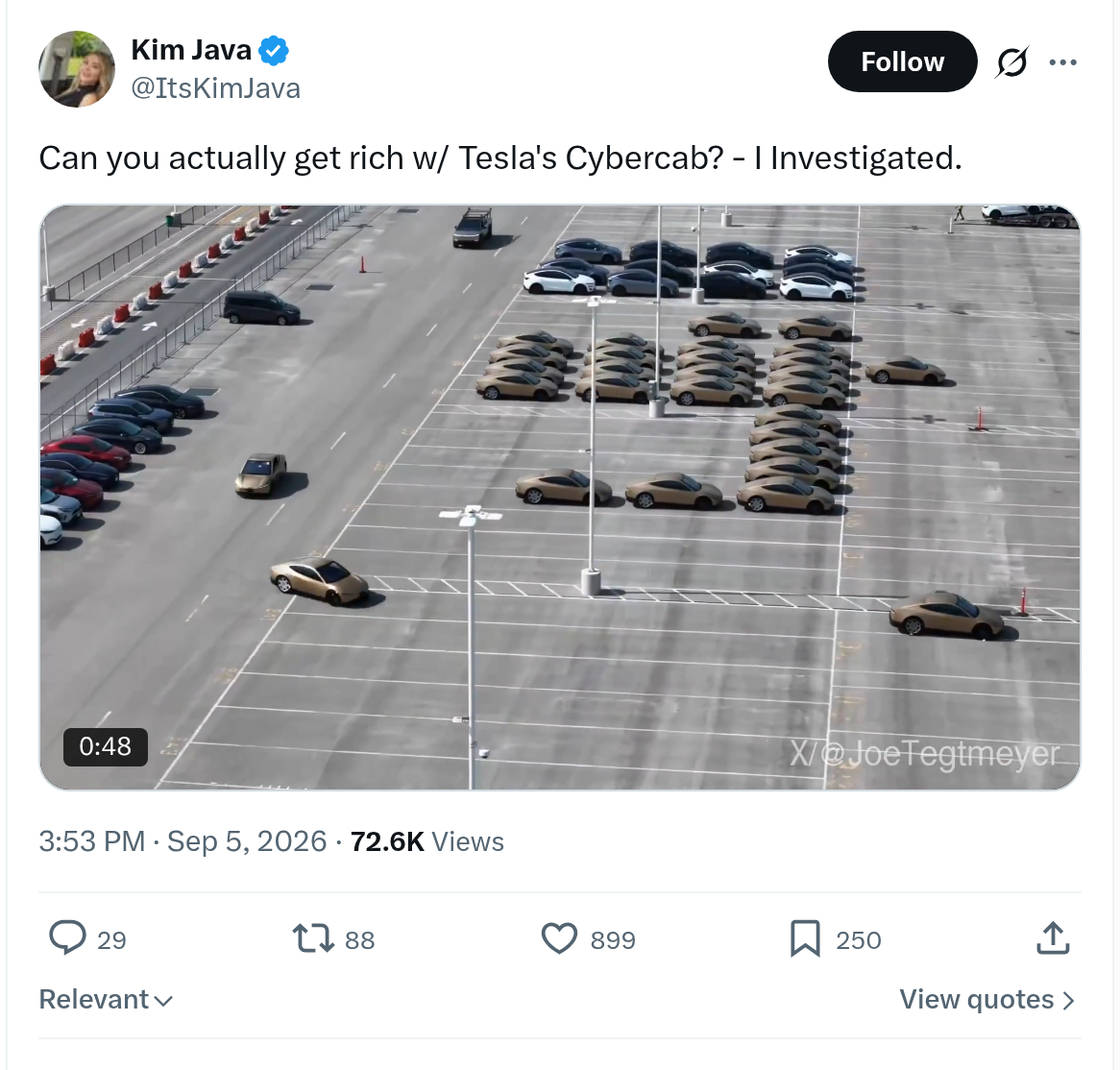
The numbers she put on screen are the ones Tesla watchers have been repeating for years. Musk has said Cybercab should cost under $30,000. He has talked about operating costs around 20 cents a mile, with Tesla taking a platform cut "kind of like the App Store," and about probable gross profit on the order of $30,000 a year from a single robotaxi. Java's video treats those lines as a starting point, not a warranty. "That is not a promise," she tells viewers after walking the cabin. "That's just a scenario."
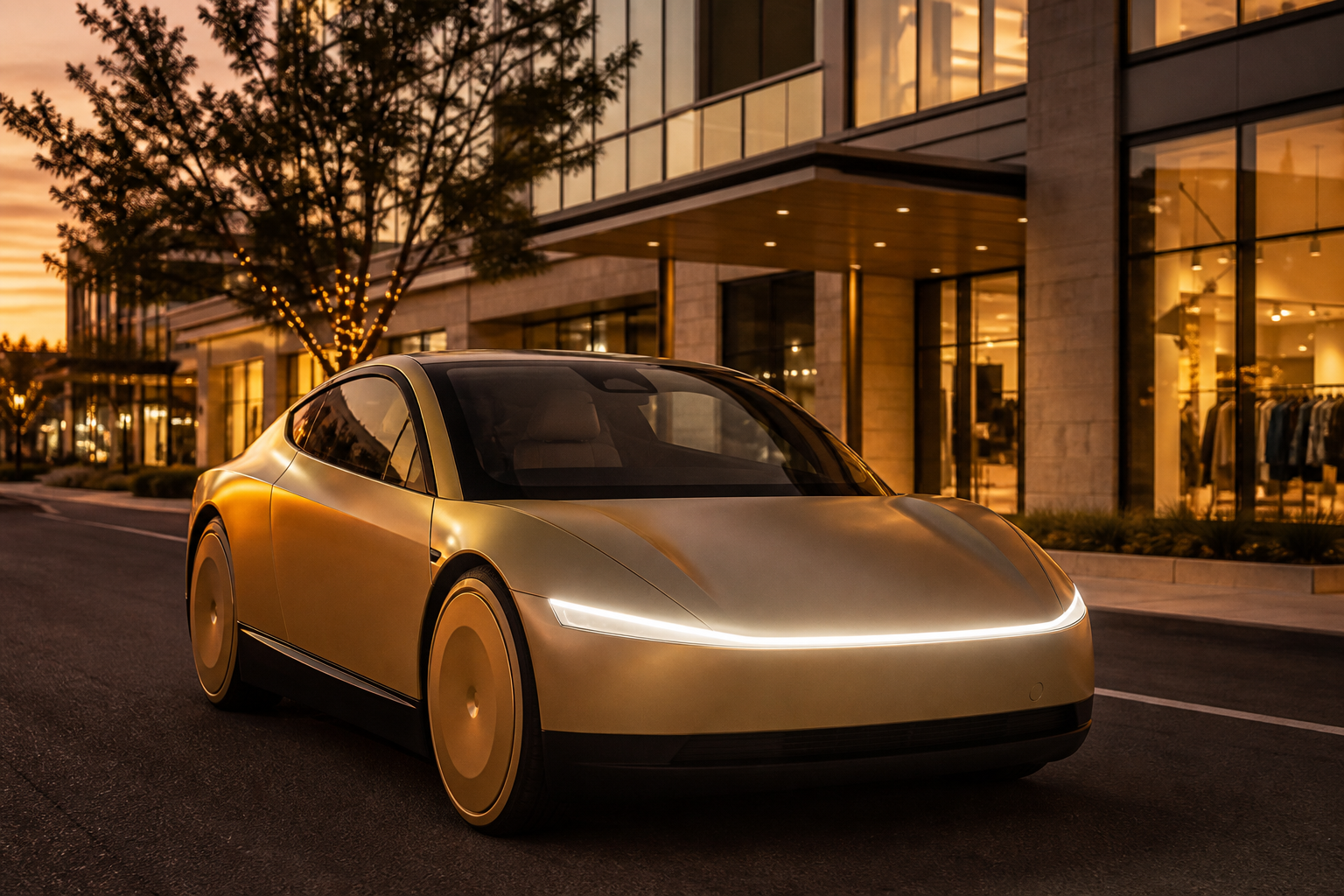
What makes the piece worth filing on a launch week is the field layer. Java walks a gold Cybercab's butterfly door, notes durable, easy-clean seats, RGB pickup lights that cue which car is yours in the app, a rear occupancy sensor for child seats, Starlink on the roof, inductive-charging talk, and a 20.2-cubic-foot trunk she rates as practical for two or three suitcases. She also films unsupervised merges through construction and rain and says she feels confident even while admitting there is no wheel to grab if nerves spike - only pull-over or support. That is the Cybercab product in one sequence: designed for utilization, not for a driver who wants an override.
She does not do the math alone. On the plaza she interviews Anuarbek, founder and CEO of Nayaa AI, who answers "of course" when asked whether he would buy a Cybercab and "five" when asked how many. He sketches 24/7 operations, 12-hour days, thin maintenance downtime, and a path where fleet scale, not a single car, is how the income story becomes real. Later guesses in the video stretch from five cars for roughly $100,000 a year of optimistic income to dozens or more for seven-figure targets. Java's own back-of-envelope, after assuming a Tesla-style cut near 30 percent and annual Full Self-Driving fees in today's neighborhood of about $1,188, lands closer to $20,000 of residual income per car before cleaning, charging, and empty miles. At that clip she counts six Cybercabs for about $100,000 a year, 13 for $250,000, 26 for half a million, and 51 for a million - still treating Musk's gross as the base case, not an audited P&L.
The ride history she pulls after a long Austin hop is the cold water. One trip shows about $20 for 53 minutes. Surge pricing flips the usual Model Y comparison so Cybercab is suddenly the dearer hail by a few dollars on the same corridor - a demand signal, not a dividend. Then comes the part every fleet operator already knows from Uber and DoorDash: deadhead. After a 45-minute paid ride, the car can burn another long stretch returning toward the core without a passenger. Utilization is the product. Utilization without a rider is cost.
That honesty is why the investigation still reads as bullish on Cybercab's design brief. A vehicle built without a steering column, pedals, or mirrors is a utilization machine if the network fills the seats. Wireless charging and robot cleaning, if they land as Tesla has teased, shrink the human labor that kills rideshare margins. Java and her interlocutors keep returning to a Supercharger analogy: Tesla proved the network first, then opened white-label participation to partners who meet the brand's standards. Own a dirty, neglected Cybercab, they argue, and you should expect to be kicked off - because the rider experience has to feel consistent. That is franchise discipline, not a get-rich meme.
The desk files this beside Tesla's own Cybercab fleet-purchasing interest form, which already asks companies about volume buying without publishing price, minimums, or delivery. Java's Saturday post is the consumer-facing twin of that funnel: people who want the income story are now stress-testing deadhead, Tesla's cut, FSD fees, tire wear, and cleaning robots before any retail order book opens. Early Texas registry counts still show a small Cybercab fleet beside hundreds of Robotaxi Model Ys. Exclusive Access nights and public app hails prove the car can take fares. They do not yet prove a private owner's P&L.
Java's X caption stays short. The YouTube title is blunter: Elon says Cybercab can make you $30,000 a year - she investigated. The useful answer from Austin is narrower and more useful. Cybercab is priced, in the pitch, like an income asset under $30,000 with robotaxi unit economics that can look extraordinary at high utilization. Getting rich, if it happens, looks less like buying one champagne coupe and more like operating a disciplined fleet on Tesla's network - with empty miles, platform fees, and maintenance standards that behave like a partnership, not a lottery ticket.
For riders in Austin this week, the car is already the point: butterfly doors, Starlink, no driver, and a fare sheet that moves with demand. For would-be owners watching Java's clip, the homework is the same work Tesla's interest form quietly invites. Count the cars. Count the hours they are paid. Count the hours they are not. Then decide whether Cybercab wealth is a headline - or a fleet plan.
Harper Quinn is a senior correspondent covering Robotaxi launches, Austin fleet ops, and the day-to-day of Cybercab rides. Previously reported transport and consumer tech for independent trade titles; based in Austin.
Source: https://x.com/itskimjava/status/2096371106399543361 (Sep 5, 2026, 22:53 UTC / 5:53 p.m. CDT); YouTube: Elon Says Cybercab Can Make YOU $30K a Year - I Investigated (gvjKDmiHtAo)

More on the wire
Breaking
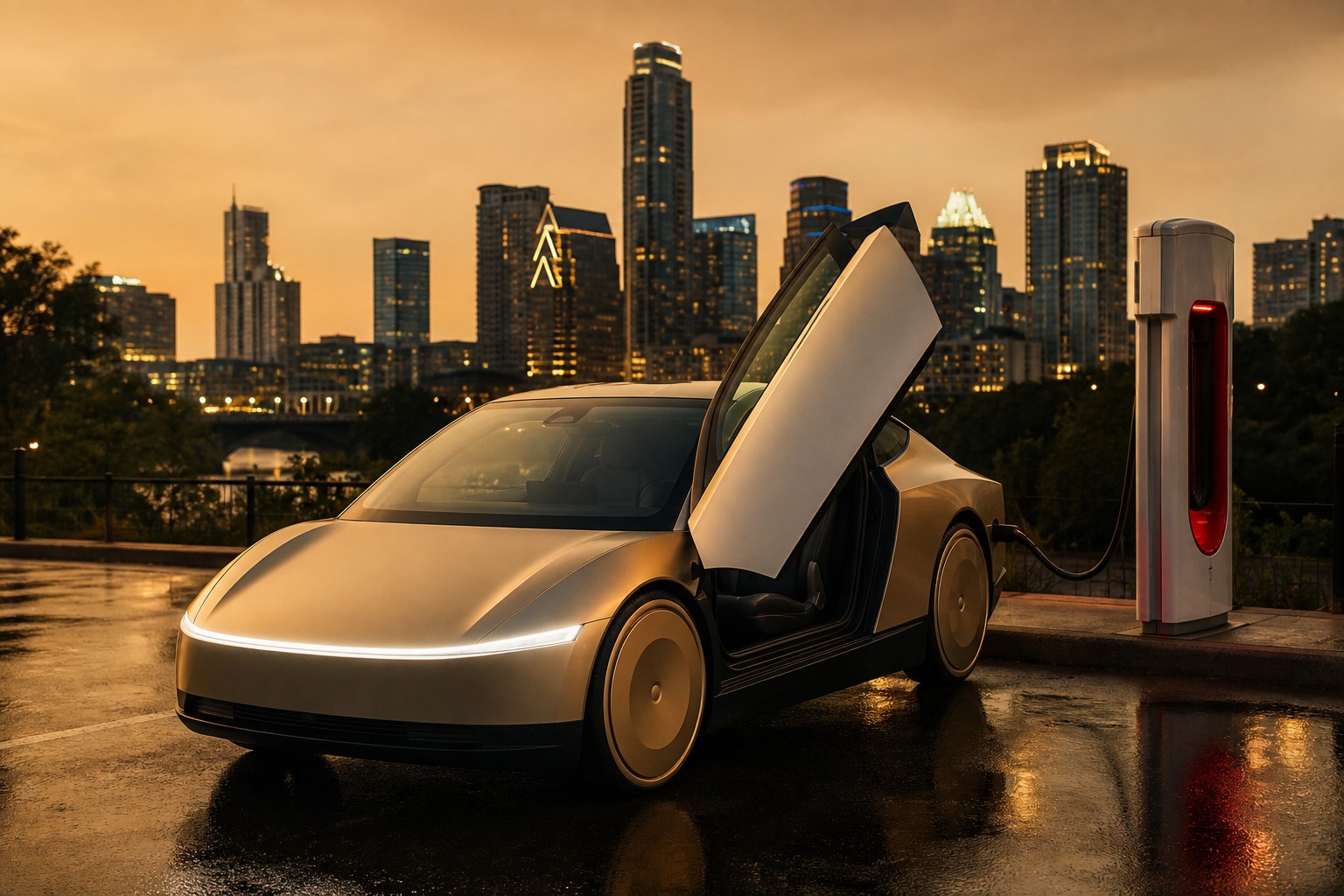
No Wall Connector: Cybercab Is Built for Fleet DC, Not Driveways
Harper Quinn · 1d ago
Breaking
Cents on the Mile: Ming Maps Cybercab's $50,000 Head Start Over Rival Robotaxis
Harper Quinn · 1d ago
Breaking
Fake Warrant, Real Ride: Jeremy Judkins Scripts Grok Into a Cybercab Police Prank
Harper Quinn · 2d ago