Latest · Breaking
Side by Side: Cybercab's Open Floor Leaves Model Y Looking Crowded
Nic Cruz Patane's stacked cabin photo - Cybercab lounge on top, Model Y cockpit below - is the simplest argument for why the two-seater feels like a different machine.
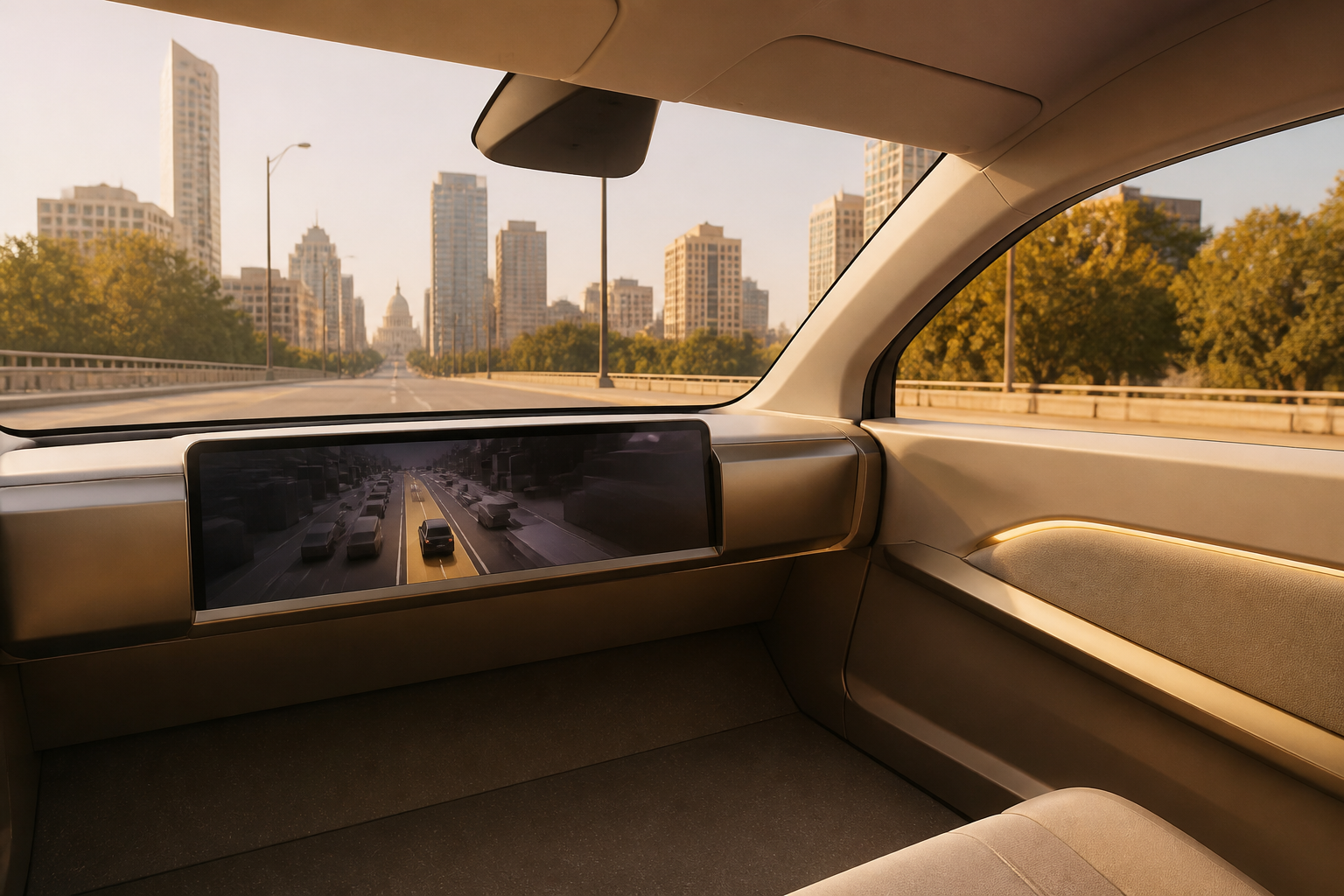
AUSTIN, Texas - Nic Cruz Patane did not need a press kit to explain what Cybercab feels like from the right-hand seat. On Sunday he posted a single stacked photograph - Cybercab on top, Model Y below - under six plain words: "Tesla Cybercab interior vs. Model Y."
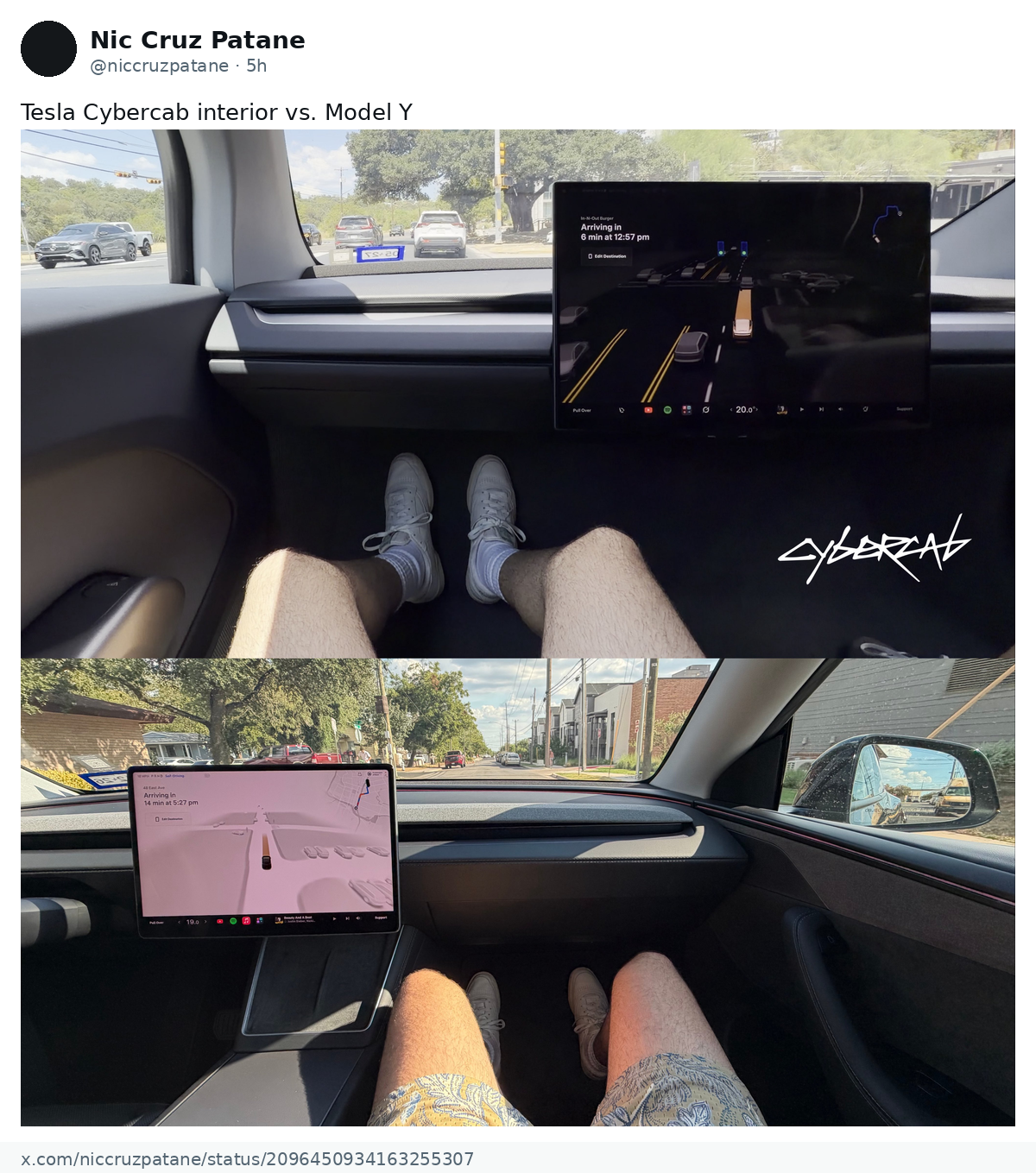
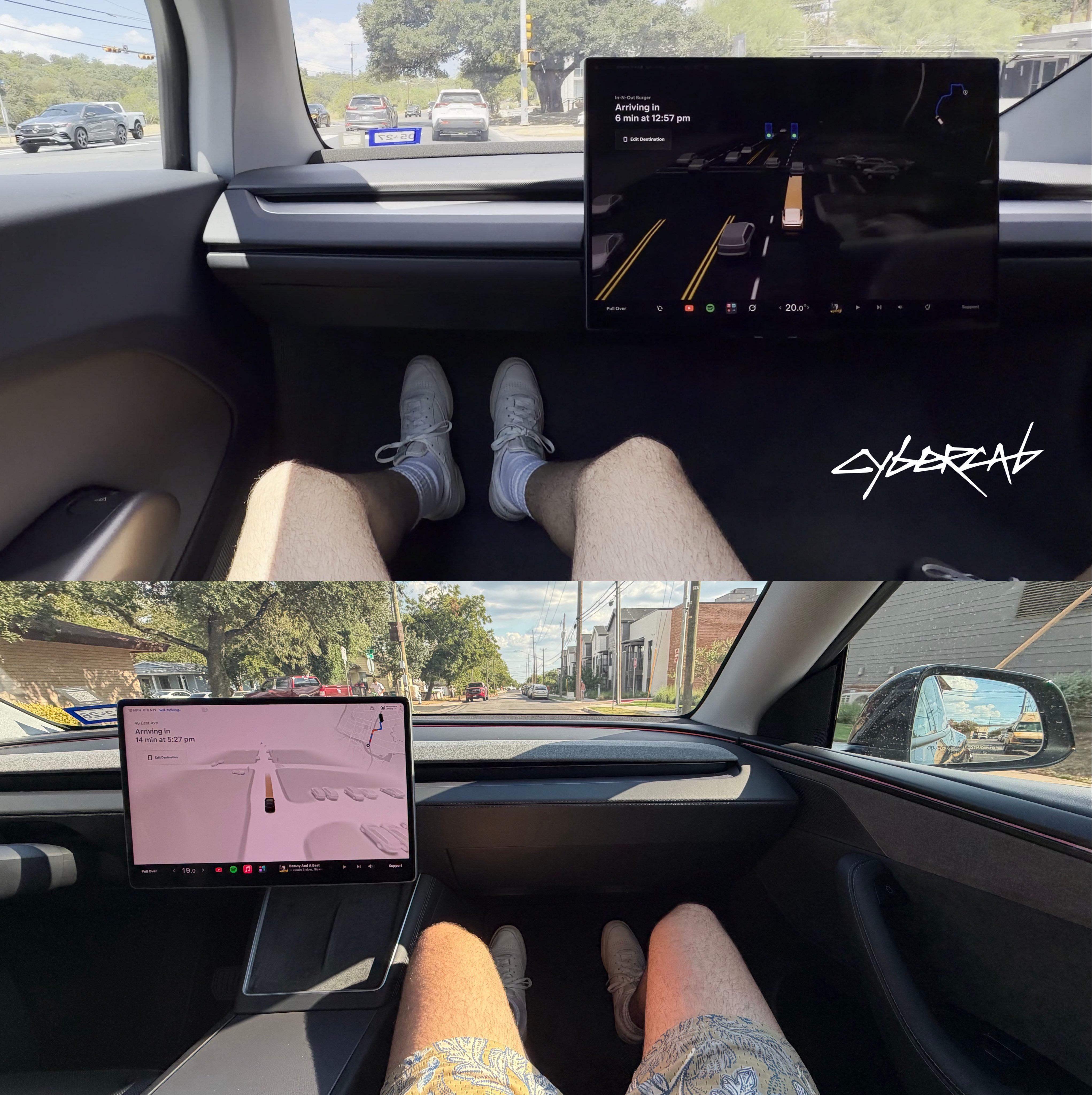
The picture is the story. In the upper frame, a passenger in white sneakers sits in a gold two-seater with no steering wheel, no pedals and no center console. A long horizontal vent runs clean across the dash. The wide landscape screen shows Tesla's three-dimensional road view - lanes, a bus, signal lights - and a route chip that reads In-N-Out Burger, arriving in six minutes. YouTube and Spotify icons sit along the bottom edge. The footwell is a flat lounge floor. A white Cybercab mark is tucked into the corner of the frame.
Below it, the same photographer's angle in a Model Y tells the older story of Tesla's volume car. A steering wheel fills the left side of the glass. A tall center console splits the cabin and holds two phones on wireless pads. The screen shows a conventional map, not the unsupervised road model. Arrival is fourteen minutes away. Patterned shorts and the same white sneakers appear in a footwell that still belongs to a car built for a driver.
That contrast is why the post matters in Austin this week. Cybercab is no longer a stage vehicle waiting for a keynote. It is a callable Robotaxi product, and the cabin Patane photographed is the product riders actually sit in: open floor, theater glass, and a screen that behaves like a co-pilot instead of a map accessory. The Model Y panel is not an insult. It is the control sample. Tesla's own best-selling SUV still carries the steering wheel, stalks and console that defined the company's first decade. Cybercab throws those parts away on purpose.
Patane has been one of the sharper Tesla and SpaceX watchers in the same feed that carried App Store Travel rankings, launch-week cabin clips and fleet color. His Sunday comparison does not claim a new hardware revision. It does not invent a price. It shows, in one scroll, why the unsupervised coupe feels different the moment you sit down. The missing wheel is obvious. The missing console is the sleeper detail. Without that spine between the seats, the Cybercab cabin reads as a small lounge with a view of the city's traffic model - not as a cockpit with the driver seat deleted.
The timing fits the week. Public Cybercab hails are open in Austin. Official Robotaxi posts have sold voice control through Grok, wheelchair-height seats, mounted-police street jokes and training measured in thousands of driving lifetimes. Against that drumbeat, a quiet interior diptych does a different job. It answers the question riders ask with their knees: where do my legs go when nobody is driving? In Patane's upper frame, they go forward into empty space. In the lower frame, they still share the car with a wheel and a console built for someone else.
Cybercab.news is treating the image as Patane's own capture and credit, posted Sunday at 04:10 UTC, not as a Tesla marketing still. The destination chip, climate readout and media icons are readable enough to date the cabin software to the live Robotaxi stack riders have been summoning all week. The Model Y half keeps the comparison honest. Tesla is not pretending every vehicle in its lineup is wheel-less. It is showing that the purpose-built cab is a different machine - lighter on parts, heavier on floor, and framed for passengers who came to ride.
There is also a product lesson hiding in the screen modes. Cybercab's panel is deep in the unsupervised visualization: other road users rendered in three dimensions, the car's path drawn through them. The Model Y panel is doing ordinary navigation. That is not a random screenshot pairing. It is the philosophical split in one phone photo. One car is still helping a human drive. The other is showing the passenger what the car already sees.
For Austin riders comparing the two in the Robotaxi app - Cybercab or Model Y - Patane's post is a useful pre-ride brief. Choose the two-seater and you get the open floor and the theater view. Choose the Model Y Robotaxi and you get four seats and the familiar console architecture. Both can be unsupervised. Only one was designed so the cabin stops apologizing for a driver who is not there.
Launch weeks produce a lot of mileage claims and a lot of jokes. They produce fewer documents you can feel with your feet. Sunday's side-by-side is that document. No wheel. No pedals. No console wall. A burger six minutes out on a screen that thinks in lanes. Beside it, the car most Teslas still are. The gap between those two photographs is the Cybercab brief in plain light.
Harper Quinn is a senior correspondent covering Robotaxi launches, Austin fleet ops, and the day-to-day of Cybercab rides. Previously reported transport and consumer tech for independent trade titles; based in Austin.
Source: https://x.com/niccruzpatane/status/2096450934163255307
More on the wire
Breaking
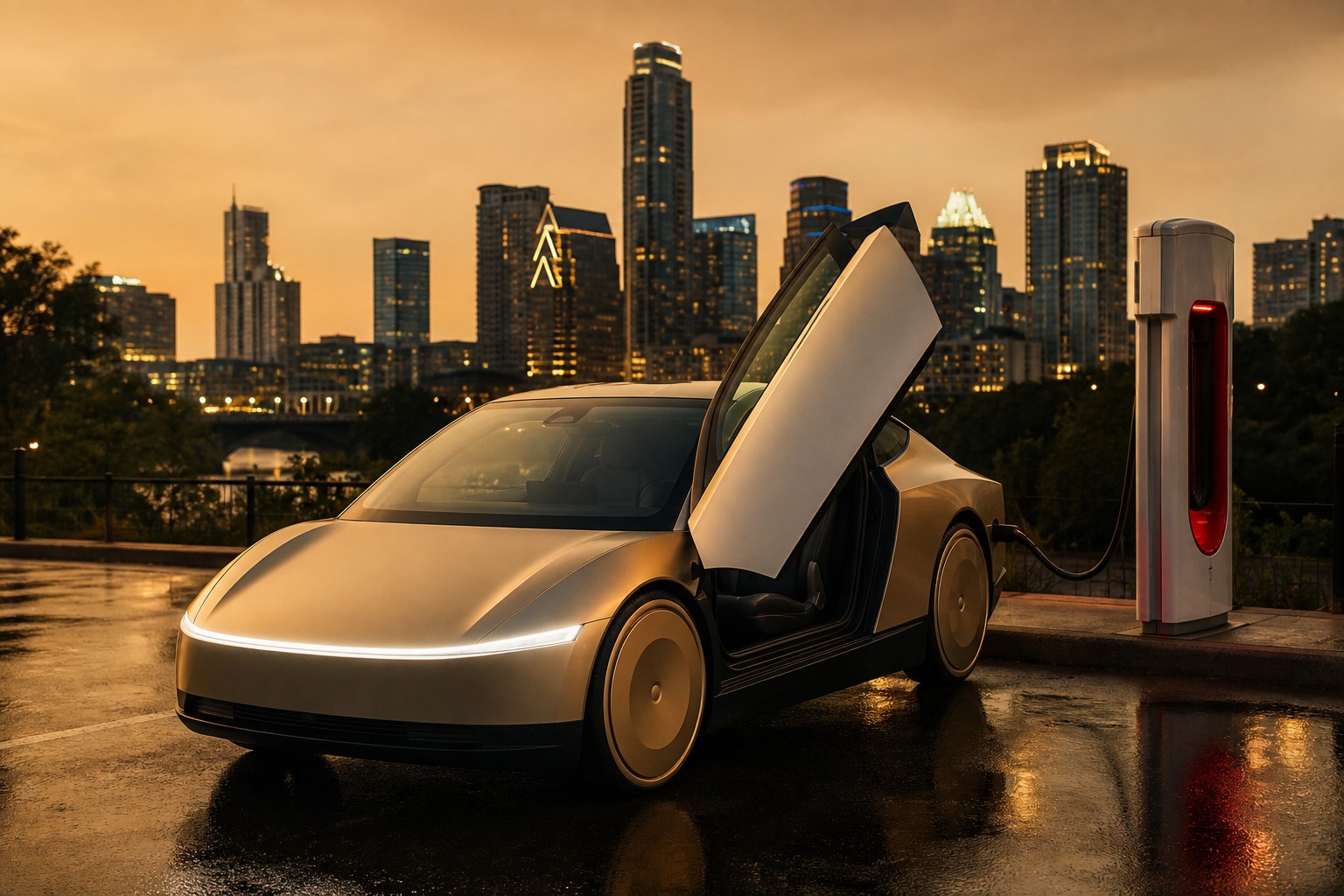
No Wall Connector: Cybercab Is Built for Fleet DC, Not Driveways
Harper Quinn · 1d ago
Breaking
Cents on the Mile: Ming Maps Cybercab's $50,000 Head Start Over Rival Robotaxis
Harper Quinn · 1d ago
Breaking
Fake Warrant, Real Ride: Jeremy Judkins Scripts Grok Into a Cybercab Police Prank
Harper Quinn · 2d ago