Policy · Policy
Under Texas Law, Tesla Cleared Its Own Cybercab
Under Senate Bill 2807, Tesla self-certified Level 4 the day the law took effect. Tonight’s guest rides rest on that filing — and on a camera-only stack NHTSA is still probing in consumer cars.
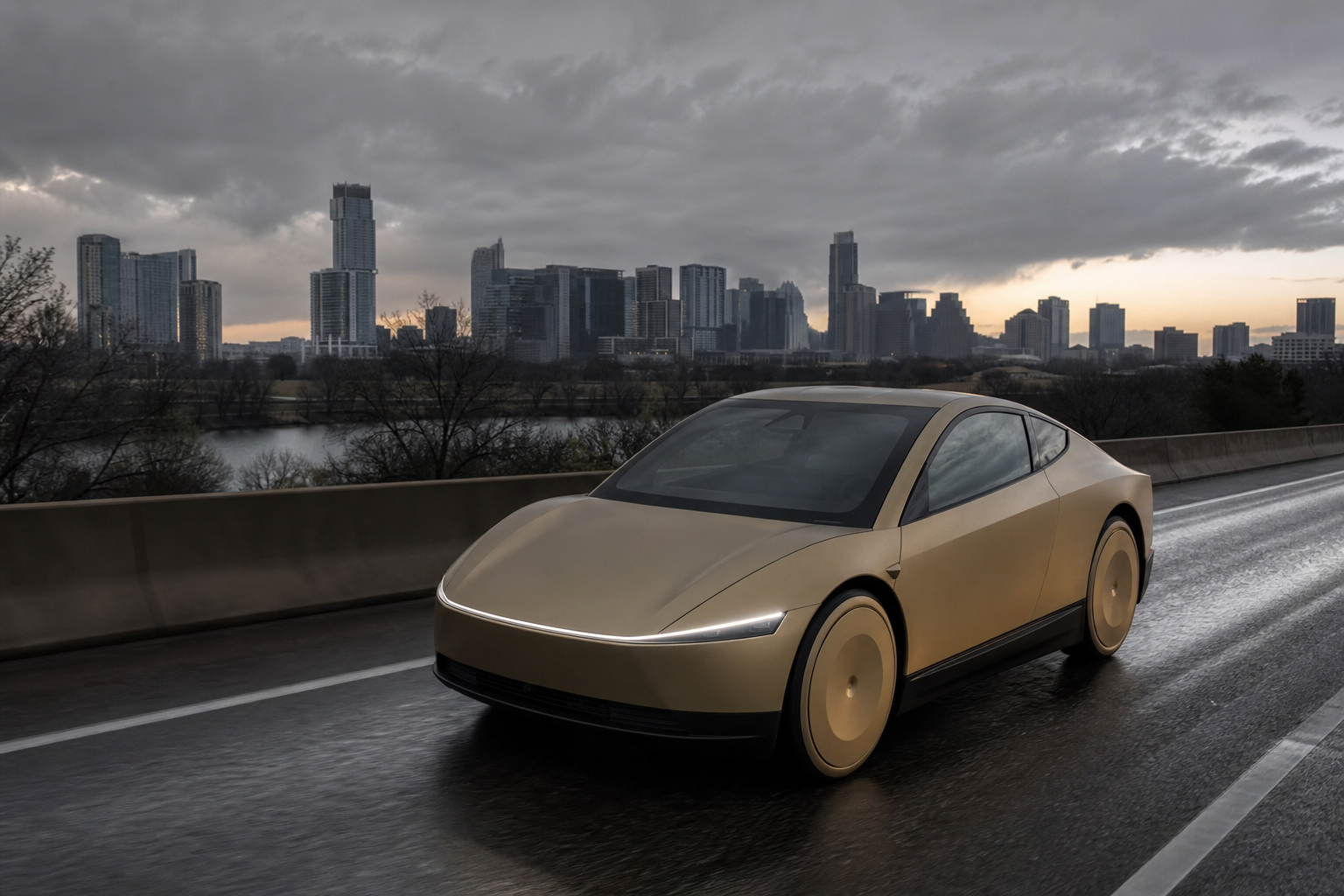
AUSTIN, Texas — The Cybercabs carrying guests on Thursday night are legally on Texas roads because Tesla said they are ready, not because an independent regulator put a driverless two-seater through a standardized public test and signed off.
Texas Senate Bill 2807, in effect since May 28, requires commercial autonomous operators to attest to SAE Level 4 capability through the Motor Carrier Credentialing System, keep insurance, share a first-responder plan and maintain an active vehicle list. TechTimes, reviewing the framework on Thursday, reported that Tesla filed its self-certification the same day the statute took effect. No Texas agency verified the technical claim by driving the stack. No federal agency has cleared Cybercab as a passenger product. The authorization is the attestation.
That is a different kind of launch story from a DMV road test or a California CPUC permit fight. SAE Level 4 is also not a blank check. It is capability inside an Operational Design Domain — geography, speed, weather, road type. Tesla has not published the ODD it certified. Riders tonight are trusting the company’s map of where the car is allowed to be clever.
The federal file sitting beside that state paperwork is Engineering Analysis EA26002. NHTSA opened it on supervised Full Self-Driving in reduced visibility — glare, fog, airborne obscurants — covering about 3.2 million vehicles. The Cybercab runs a Robotaxi software branch, not the consumer supervised build under that probe. It still runs the same camera-only idea: eight cameras, no lidar, no radar. TechTimes noted Austin’s Thursday forecast called for clouds and possible rain from a developing tropical depression, the kind of degraded-visibility weather the probe is built around.
Tesla’s own numbers add a second caveat. At the July 22 earnings call, AI chief Ashok Elluswamy said the Robotaxi fleet was already on early Full Self-Driving v15 builds and that about 40 percent of seven planned improvement tracks had been merged — a Tesla figure, not an outside audit. The 380,000 unsupervised miles the company cited then were driven on an architecture it still described as incomplete.
None of that stops Exclusive Access. It frames it. Guests selected by sweepstakes and invitation will ride a car with no wheel and no pedals under a Texas rule that trusts the manufacturer’s filing. The EPA certificate on the production Cybercab — TechTimes cites conformity number TTSLV00.0L1A — is an emissions and efficiency document, not an autonomy blessing. Separately, those EPA papers describe a front-wheel-drive, wireless-charging two-seater with a 47.6 kWh pack and an adjusted range near 300 miles, fleet that matter for fleet math more than for Thursday’s stage lights.
A registry of 45 Cybercabs and a self-certification on day one of a new statute are how Tesla got to tonight. Whether that is enough is the argument the miles after 4:45 p.m. will have to answer.
Priya Nair is a policy reporter covering AV regulation, state clearances, and FSD governance. Trained as a legal affairs reporter; files from the policy beat with an eye on what operators can actually ship.